Addressing Climate Change How Energy Transition Contributes To A More Sustainable Future
Updated: April 9, 2026
The banco Environment Brazil sits at the center of a longer, slower transition in which climate risk and financial strategy intersect across Brazil’s diverse economy. Lenders across the country are recalibrating risk, markets are rewriting what credible decarbonization looks like, and communities are watching how capital flows translate into real changes for farms, forests, and city projects. This analysis tracks how climate finance shapes lending patterns, risk pricing, and investment decisions that ripple through supply chains and local resilience. It also highlights where policy signals, market incentives, and practical constraints align—and where they diverge, creating both opportunities and risks for borrowers and lenders alike.
Financing the Transition: Brazil’s Climate Banking Landscape
Brazil’s climate banking landscape is not monolithic. Public banks, private lenders, and development finance institutions pursue different risk tolerances and mandates, yet a shared trend is the integration of climate risk into the credit process. This shift is driven not only by compliance but also by investor expectations and international partnerships that demand more credible decarbonization paths. Banks are rolling out climate risk dashboards, sector-specific screening, and pilot programs for green financing lines. However, translation from policy to practice remains uneven across regions. In the Amazon and Cerrado, land-use decisions intersect with livelihoods and biodiversity, meaning the cost of capital can reflect environmental risk in profound and sometimes divergent ways.
Pricing signals and tenors vary by sector. Agriculture and infrastructure projects tied to resilience often attract longer tenors and more stringent safeguards, while energy efficiency and renewable projects may receive favorable terms when aligned with decarbonization goals. The interaction of public policy, corporate strategy, and local practice yields a mosaic: some sectors see easier access to capital, others face higher risk premia due to deforestation exposure or regulatory uncertainty. For rural communities and small producers, access to credit frequently depends on credible environmental plans, traceability, and reliable intermediaries who reduce information asymmetry.
In this environment, the banco Environment Brazil embodies a broader question: can Brazilian banks align profitability with planetary boundaries? The answer is not simple. It requires better data, stronger governance, and risk-sharing instruments that help lenders extend credit without encouraging risky practices. The coming years will reveal whether the financial system can fund adaptation and decarbonization across diverse climates, crops, and urban realities while preserving financial stability.
Policy Signals, Corporate Discourse, and Market Realities
Policy signals are a major driver of bank behavior. Climate-related regulations, deforestation enforcement, and disclosure requirements elevate the perceived risk of assets tied to high-deforestation zones. Banks respond by adjusting risk weights, implementing due-diligence protocols, and directing capital toward projects with measurable environmental and social benefits. Corporate discourse matters too; multinational lenders emphasize climate ambition in public reporting, while local banks weigh community impacts and reputational risk in decision-making. The result is a layered reality where decisions in major cities or national capitals echo through rural municipalities and frontier towns alike.
Market realities amplify the complexity. There can be scarce capital in certain geographies, competition for risk-adjusted, creditworthy borrowers, and the challenge of aligning short-term profits with long-run resilience. Public-sector lenders can absorb some transition costs, but they do not eliminate frictions. For smallholders and municipal projects, long-term patient capital remains scarce, even as blended finance models and credit guarantees gain traction. The challenge is to fuse policy ambition with practical financing that keeps households and ecosystems whole while widening access to capital for decarbonization efforts.
Impacts on People and Places: Agriculture, Cities, and Small Businesses
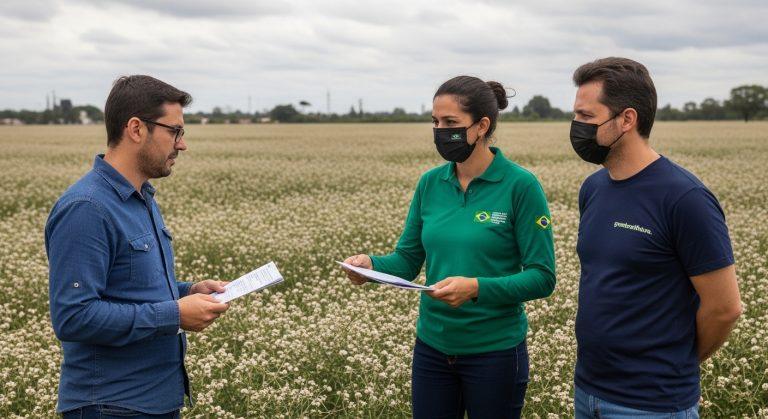
Climate finance in Brazil has a pronounced social dimension. Rural producers confront shifting climate risks—droughts, floods, and erratic rainfall—that affect yields and input costs. Access to credit that supports irrigation, soil health, and crop diversification can reduce vulnerability, but lenders demand credible risk mitigation and traceability within value chains. Urban resilience projects—flood defenses, cooling systems, and energy efficiency retrofits—offer protection for vulnerable households, yet financing these initiatives requires coordinated governance among municipalities, utilities, and banks. Small businesses serving agricultural supply chains or resilience networks often rely on flexible credit lines; delivering timely, patient capital can unlock adaptation investments and sustain local employment.
Safeguards matter. Banks increasingly benchmark projects against environmental and social criteria to avoid adverse outcomes for ecosystems and communities. Capacity gaps persist in local government and civil society, complicating monitoring, verification, and enforcement. Bridging these gaps will depend on credible data, transparent reporting, and trusted local partners who translate national climate goals into concrete, bankable projects that communities can own and manage over time.
Actionable Takeaways
- Integrate climate risk into credit pricing and loan terms with sector-specific scenarios that reflect regional exposure and resilience options.
- Expand blended finance and guarantee mechanisms to reach smallholders, cooperatives, and municipal projects that struggle to obtain long-term, patient capital.
- Prioritize transparent disclosure and credible impact metrics to reduce information asymmetry between lenders, borrowers, and communities.
- Foster public-private partnerships that align bank incentives with community resilience, biodiversity protection, and sustainable supply chains.
- Invest in local data collection, capacity building, and verification systems to improve risk assessment and project evaluation at the municipal and regional level.