
Eco Innovation How Technology Is Leading The Fight Against Climate Change
Updated: April 9, 2026
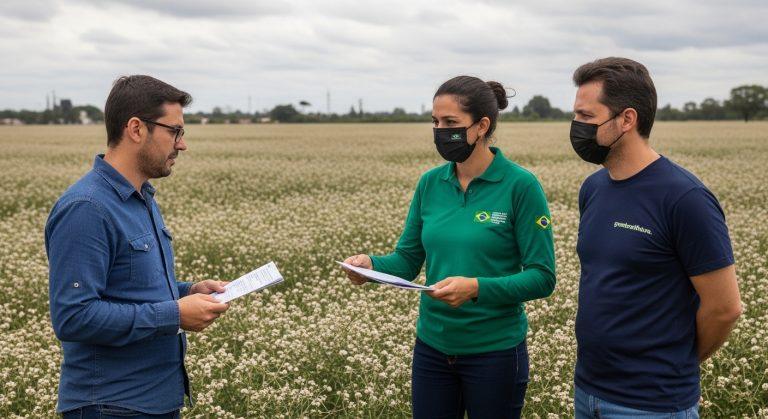
The discourse around policy, rights, and resources is reshaping brazil Environment Brazil, signaling a deeper rethinking of how the nation guards its rivers and forests.
Policy shifts and governance under scrutiny
In recent weeks the government revoked a decree that would have privatized access to three Amazonian rivers, a move that followed Indigenous protests and mounting questions about river stewardship. The reversal does not erase tensions between development objectives and ecological safeguards. River resources in the Amazon are not simply commodities; they underpin fisheries, livelihoods, water security, and regional climate regulation. When governance of water bodies is ceded to private interests or untested concession models, the state carries enhanced responsibility for monitoring, baseline hydrological data, and equitable access. The current pause creates space for a more deliberate approach that foregrounds environmental licensing standards and transparent oversight by agencies such as IBAMA, FUNAI, and the relevant state authorities. It also invites clearer criteria for public consultation and social impact assessment, so communities most affected by river use can weigh in before new arrangements are formalized.
Looking ahead, policy makers face a choice between accelerating resource extraction and strengthening adaptive governance that can weather climate variability. The causal chain from policy design to on-the-ground outcomes includes budget allocations for monitoring, capacity-building for local institutions, and the alignment of river-use rules with fisheries, irrigation, and hydropower planning. Scenarios range from a strengthened, participatory framework that protects ecosystem services to a fragmented system where weak enforcement allows degradation and unequal access. The most plausible trajectory is incremental improvements that codify participation and data sharing while avoiding abrupt privatization without social consent.
Indigenous rights, oversight, and environmental justice
Indigenous communities have long asserted that riverine resources are not simply assets to be allocated; they are integral to culture, subsistence, and sovereignty. The revocation of privatization attempts can be framed as a test case for how Brazil translates constitutional protections and international climate commitments into practical governance. Oversight mechanisms—such as public dashboards for environmental licensing, independent monitoring, and obligatory free, prior, and informed consent—play a central role in reducing disputes and building trust. The discourse also touches on environmental justice: when downstream communities rely on clean water or fish stocks, governance must account for cumulative impacts, including deforestation trends, sedimentation, and upstream land uses. A robust framework would pair legal rights with scientific transparency and community-based monitoring to ensure accountability.
Economic and operational implications for Brazil’s ecosystems
Beyond the politics of decree-writing, the debate has tangible consequences for Brazil’s ecosystems and the economies that depend on them. River systems in the Amazon support fisheries, tourism, and agrarian livelihoods; alterations in governance can influence access to water for irrigation, the reliability of hydroelectric planning, and the resilience of wetland habitats that filter carbon and nutrients. A governance model that emphasizes participatory decision-making can better balance short-term revenue opportunities with long-term ecosystem services. Conversely, moves toward privatization without robust environmental safeguards risk externalizing costs onto local communities and the public purse, particularly in times of drought, flood, or biodiversity stress. The goal is to anchor development in green, defensible policy that incentivizes preservation of ecological functions while enabling sustainable use.
Actionable Takeaways
- Embed comprehensive environmental and social impact assessments before altering river governance.
- Require free, prior and informed consent from affected Indigenous and traditional communities for new water-use concessions.
- Increase transparency with open data portals and independent monitoring of river resources and licensing.
- Invest in community-based stewardship programs and diversified livelihoods to reduce pressure on ecosystems.
Source Context
From an editorial perspective, separate confirmed facts from early speculation and revisit assumptions as new verified information appears.
Track official statements, compare independent outlets, and focus on what is confirmed versus what remains under investigation.
For practical decisions, evaluate near-term risk, likely scenarios, and timing before reacting to fast-moving headlines.
Use source quality checks: publication reputation, named attribution, publication time, and consistency across multiple reports.
Cross-check key numbers, proper names, and dates before drawing conclusions; early reporting can shift as agencies, teams, or companies release fuller context.