
A broad view of the Amazon rainforest with rivers and signs of conservation and sustainable agriculture.
Updated: April 9, 2026
Across Brazil, environmental decision-making sits at the intersection of climate risk, Indigenous rights, and economic development. The phrase brazil Environment Brazil captures a country negotiating a path between preservation and growth. This analysis surveys how policy shifts, regional governance, and civil society pressure are reshaping the environmental landscape, with consequences for Amazon protection, river basins, and rural livelihoods. In the wake of protests and climate shocks, policymakers face a set of choices that could redefine Brazil’s leadership on the global stage while determining whether local communities gain voice or are sidelined.
Policy Shifts and Indigenous Rights
In recent weeks a decree privatizing three Amazon river basins was revoked following Indigenous protests and legal challenges. Analysts say the reversal constitutes a meaningful, if incremental, check on centralized resource management that could set a precedent for the protection of riverine sovereignty and ecological integrity. Critics argued that such arrangements risk fragmenting governance, exposing fragile ecosystems to market-driven exploitation, while supporters contended that clearer private-sector efficiency could enhance investment in infrastructure and services. The outcome demonstrates that environmental policy in Brazil remains a negotiation among federal authorities, states, Indigenous leadership, and civil society, with each actor seeking to turn policy into real, on-the-ground protections.
Climate Risks, Floods, and River Basins
The recent floods across parts of Brazil, as reported by Reuters, have pushed dozens of lives lost and many more missing, underscoring the immediacy of climate-related hazards in key basins. The disaster exposes vulnerabilities in rural livelihoods and urban perimeters that run along the Paraná, the Amazon, and Atlantic watershed corridors. Experts warn that climate change will intensify hydrological extremes, requiring a shift toward adaptive planning, resilient infrastructure, and better data. The challenge for policymakers is to weave disaster risk reduction into development planning, so that efforts to expand agriculture or energy generation do not amplify exposure to floods and droughts.
Agriculture, Soy, and Green Initiatives
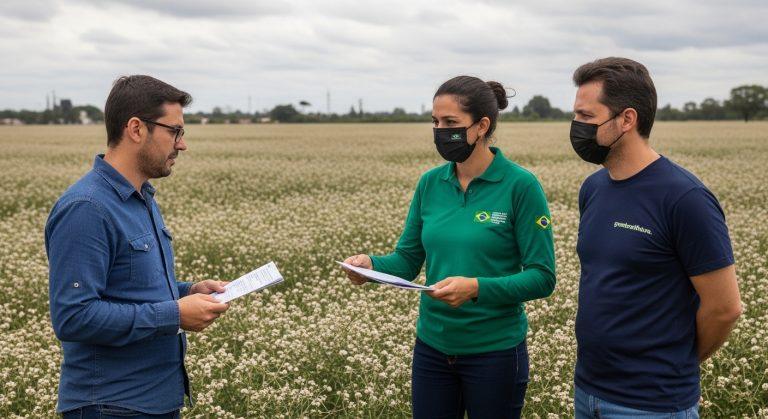
Within Brazil’s agricultural frontier, a notable shift is underway: some soy farmers are embracing climate-smart practices and transparency initiatives to curb deforestation pressure. The adoption of reduced tillage, cover crops, and integrated pest management signals a move toward less environmentally costly production. Co-ops and retailers are increasingly tying contracts to sustainability metrics, which can reward producers who protect forests or restore degraded land. Nevertheless, challenges persist: uneven access to credit, land tenure disputes, and the need for robust certification schemes that can withstand market volatility. The outcome will depend on whether green initiatives translate into measurable habitat protection and resilient incomes for rural communities.
Actionable Takeaways
- Strengthen Indigenous-led stewardship in resource management decisions, including formal recognition of river and forest rights.
- Scale funding and technical support for riverine restoration and conservation programs.
- Promote climate-smart agriculture across major supply chains, with incentives for smallholders and transparency.
- Invest in disaster risk reduction and climate adaptation, including early warning systems and resilient infrastructure.
- Improve data availability and governance, ensuring environmental metrics are accessible to communities and researchers.
Source Context
From an editorial perspective, separate confirmed facts from early speculation and revisit assumptions as new verified information appears.
Track official statements, compare independent outlets, and focus on what is confirmed versus what remains under investigation.
For practical decisions, evaluate near-term risk, likely scenarios, and timing before reacting to fast-moving headlines.
Use source quality checks: publication reputation, named attribution, publication time, and consistency across multiple reports.
Cross-check key numbers, proper names, and dates before drawing conclusions; early reporting can shift as agencies, teams, or companies release fuller context.
When claims rely on anonymous sourcing, treat them as provisional signals and wait for corroboration from official records or multiple independent outlets.
Policy, legal, and market implications often unfold in phases; a disciplined timeline view helps avoid overreacting to one headline or social snippet.
Local audience impact should be mapped by sector, region, and household effect so readers can connect macro developments to concrete daily decisions.
Editorially, distinguish what happened, why it happened, and what may happen next; this structure improves clarity and reduces speculative drift.
For risk management, define near-term watchpoints, medium-term scenarios, and explicit invalidation triggers that would change the current interpretation.