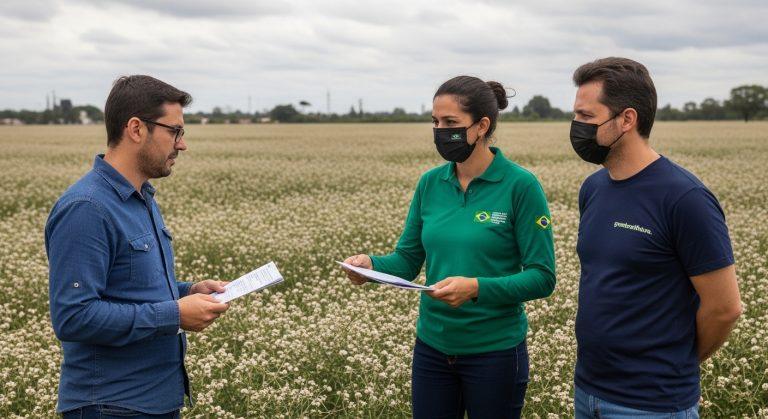

brazil Environment Brazil: Brazil’s Environmental Policy at a Crossr
Updated: April 9, 2026
In debates about brazil Environment Brazil, policymakers, communities, and investors grapple with how to align climate goals with development needs. The path Brazil chooses today will echo beyond its borders as the Amazon’s fate, river systems, and coastal ecosystems influence regional climate and global markets. This analysis surveys the policy landscape, tests how different actors frame risk and opportunity, and sketches scenarios for 2030 that balance conservation with livelihoods.
Context: Brazil’s environmental policy crossroads
Brazil stands at a policy crossroads where forest protection, river governance, and rural development compete for budget and political attention. Global climate commitments emphasize reducing deforestation and strengthening enforcement, even as commodity markets demand reliable access to land and water. In this context, signals from federal agencies, state governors, and the private sector increasingly shape what gets funded, licensed, or allowed to operate on the ground. For the brazil Environment Brazil audience, the central question is not only forest area but how ecosystems and communities endure amid shifting markets and changing weather patterns.
Deforestation pressures, polluted waterways, and biodiversity losses translate into tangible costs for agriculture, hydropower, and fisheries, while creating opportunities for nature-based solutions, sustainable supply chains, and ecotourism. The balance of incentives—subsidies for conservation versus incentives for extraction—will determine whether Brazil leans toward resilience or short-term gains that deepen exposure to climate shocks.
Policy shifts and private sector dynamics
Policy movements in Brazil increasingly hinge on how licensing, land tenure, and environmental oversight are harmonized with investment timelines. Some reforms aim to speed up project reviews and provide clearer rules of engagement for developers, while others seek to tighten enforcement and restore integrity to forest and water protections. The tension is real: faster permitting can attract capital, but lax standards risk ecosystem services that underpin long-term productivity in agriculture and energy. In parallel, debates about carbon markets, payments for ecosystem services, and jurisdictional approaches to deforestation connect local decisions to global climate finance streams. The pragmatic reader will see a pattern: policy clarity and predictable rules reduce risk for business, yet those rules must be anchored in credible science and strong governance to avoid local displacement and environmental backsliding.
Private sector actors increasingly frame sustainability as risk management and brand resilience, not merely compliance. They advocate for transparent dashboards, independent monitoring, and granular land-use data to navigate supply chains that span from cattle ranching to soy farming and pulp production. For policy-makers, the challenge is to design incentives that reward sustainable practices without creating loopholes that undermine environmental gains. The result should be a spectrum of instruments—regulatory, financial, and voluntary—that align private interests with public goods over the medium term.
Indigenous rights, river governance, and social license
Indigenous communities and riverine populations are central to any credible environmental strategy in Brazil. Rivers are not only transport arteries and water sources; they are cultural lifelines and integral to livelihoods. When governance mechanisms fail to recognize free, prior, and informed consent, or when land and water rights are unsettled, communities bear disproportionate costs from environmental mismanagement or stalled protections. Policy debates increasingly foreground social license—recognition that local support is essential for sustainable trajectories—especially for projects affecting river basins and forest frontiers. A lasting approach requires robust consultation, respect for traditional knowledge, and mechanisms to translate community priorities into action at scale without eroding autonomy.
Rivers in particular sit at the junction of conservation and development. Initiatives that promote watershed restoration, pollution controls, and equitable access to water can yield co-benefits for fisheries, agriculture, and energy generation. Yet these benefits depend on credible governance, transparent funding, and strong local institutions. The outcome of these debates will influence not only Brazil’s environmental standing but also its capacity to negotiate favorable terms with international partners seeking responsible supply chains and climate-compatible investment.
Economic trade-offs and climate resilience
Climate resilience in Brazil hinges on recognizing and managing the trade-offs between short-term economic activity and long-run ecological intactness. Improving resilience means reducing exposure to wildfire risk, flood damage, and drought impacts that disrupt farming calendars and electrification plans. It also means diversifying the rural economy beyond commodity dependence, expanding services, ecotourism, and green infrastructure that bolster local incomes while preserving forests and watersheds. Conversely, aggressive expansion of extractive activities without adequate safeguards can magnify vulnerability to climate shocks and erode trust in public institutions. The pragmatic takeaway is clear: resilience investments yield multiple dividends, but only if guided by transparent planning, community involvement, and credible science-based targets that are periodically updated as conditions change.
Brazil’s path to resilience will involve sectoral coordination among agriculture, energy, water, and land administration, as well as alignment with regional climate risks. For farmers and smallholders, access to risk insurance, weather data, and market linkages will determine whether adaptation measures pay off. For urban and coastal areas, nature-based defenses—wetlands, mangrove restoration, and forest buffers—can dampen extreme events and support sustainable growth in ports, tourism, and fisheries. The systemic insight is simple but powerful: climate resilience is not a single policy; it is an integrated system where land, water, energy, and people reinforce each other when designed with foresight and equity.
Scenario planning: paths to 2030
Looking ahead, Brazil could chart several plausible routes. A conservation-forward scenario would strengthen enforcement, expand protected areas, and embed Indigenous land rights within a credible monitoring framework, potentially attracting climate finance and preserving biodiversity. A growth-at-any-cost scenario risks eroding forest cover and river health, heightening exposure to climate risks, and provoking social tensions that undermine competitiveness. A middle-ground scenario combines robust enforcement with smart incentives for sustainable production, inclusive governance, and investment in green infrastructure. Each path carries distinct risks and rewards, and the optimal course will likely blend elements from all three—anchored by credible data, participatory decision-making, and a credible fiscal plan to sustain long-term outcomes.
In practical terms, 2030 could look like a Brazil where environmental indicators improve alongside shared prosperity, but only if public institutions coordinate across ministries, states, and communities; if private finance rewards verified sustainability; and if civil society maintains a vigilant role in monitoring and accountability. For the brazil Environment Brazil audience, the takeaway is that policy design matters as much as policy rhetoric: concrete, verifiable progress is what shifts markets, protects ecosystems, and secures a livable climate for future generations.
Actionable Takeaways
- Policy design should pair enforceable standards with transparent monitoring to reduce regulatory risk for investors while improving forest and river health.
- Expand participation by Indigenous and local communities in decision-making, ensuring free, prior, and informed consent informs project planning and implementation.
- Invest in data infrastructure—high-resolution land-use maps, water-quality monitoring, and climate risk dashboards—to enable evidence-based decisions and traceable progress.
- Link climate finance to verifiable outcomes through independent auditing, with clear targets for deforestation rates, river restoration, and biodiversity gains.
- diversify rural livelihoods by supporting ecotourism, agroforestry, and value-added products that align with conservation goals and resilience.
- Encourage private-sector alignment with sustainability through clear incentives, long-term visibility on policy trajectories, and credible certification schemes.
Source Context
- Mongabay “Brazil revokes decree privatizing three Amazonian rivers after Indigenous protests”
- The Church Times “Time is now for Anglican Communion to lead on tackling climate crisis, Brazilian Primate says”
- The National Law Review “Sesc and Senac Bahia Lead Brazil’s Service Sector with Carbon Neutral Expansion”