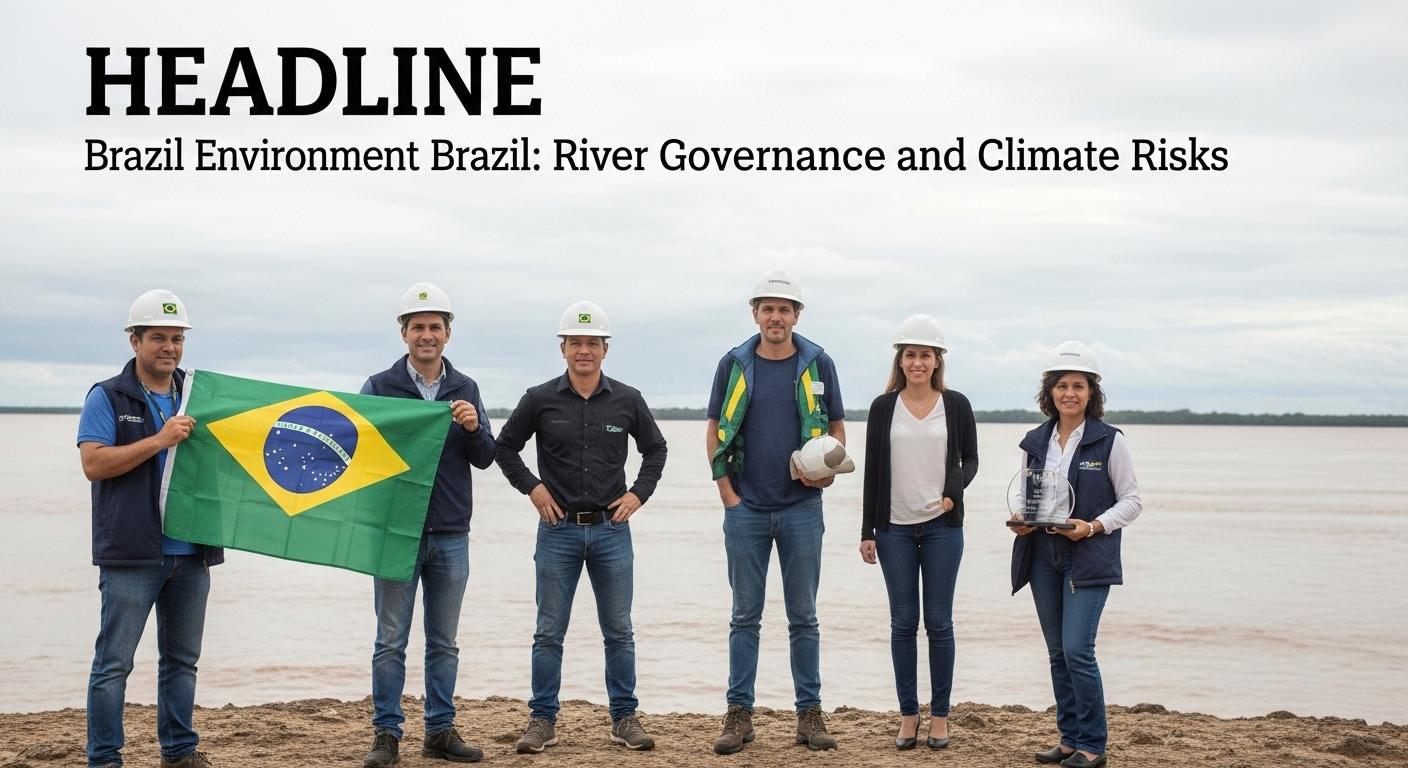
Brazilian river networks with Indigenous communities and climate resilience concept.
Updated: April 9, 2026
In the evolving landscape of brazil Environment Brazil, policy momentum, Indigenous rights, and water governance are converging as Brazil confronts a climate-laden future and public demand for stewardship of vital rivers.
Context: policy shifts and river management
Recent policy moves highlighted a tension between market-based resource management and public oversight. Brasília rolled back a decree that would have opened three Amazonian rivers to private management, a reversal welcomed by Indigenous communities and environmental groups who warned that water quality, navigation, and ecological protections could suffer under privatization. The episode underscored that river governance remains a combustible intersection of federal signaling, state interests, and civil-society advocacy. It also pointed to a broader pattern in which environmental policy vacillates between growth imperatives, energy needs, and forest protection. While some argue that private investment can accelerate infrastructure and efficiency, others caution that water—both a public trust and a cultural keystone—should not be treated as a purely commercial asset without robust safeguards.
Rivers, privatization, and Indigenous rights
Water resources in Brazil traverse lands inhabited by Indigenous peoples whose livelihoods, cultures, and treaty obligations are deeply tied to the health of river ecosystems. Indigenous leadership and civil-society groups have pressed for greater recognition of Free, Prior and Informed Consent (FPIC) in decisions about river management. Co‑management models, which include Indigenous representatives, local communities, and environmental organizations, can improve monitoring and accountability. Yet implementation requires legal clarity, sustained funding, and credible enforcement. The risk of privatizing river flows extends beyond price dynamics to potential fragmentation of basins, reduced downstream accountability, and governance gaps that complicate emergency responses during extreme weather events.
Hydrology, climate risk, and adaptation
Brazil’s climate outlook features greater hydrological volatility: regions experience heavier rainfall in some seasons and protracted drying in others, amplifying flood and drought risks. Recent years have seen deadly floods in the southeast and related riverine hazards that stress infrastructure not designed for intensified extremes. Analysts advocate a shift toward watershed-scale planning, forest restoration in upper basins, landslide mitigation, and nature-based solutions that bolster resilience. Integrating climate projections into urban and rural planning can help prevent repeated losses, safeguard water quality, and sustain agricultural productivity—key to a balanced, climate-resilient growth model.
Policy pathways and global implications
To move beyond polarized debates, Brazil could pursue pathways that couple environmental safeguards with development needs. This includes transparent river baselines, independently verifiable data, and inclusive governance that meaningfully incorporates Indigenous voices. Public funding and concessional finance can de-risk environmentally sound projects, while performance-based contracts with enforceable safeguards can attract private capital without sacrificing public trust. Internationally, Brazil’s approach to river governance and Indigenous rights intersects with Paris-aligned climate commitments and growing expectations from global supply chains that demand sustainable management of vital water resources and hydroelectric infrastructure.
Actionable Takeaways
- Reassert public stewardship of essential waterways through clear permitting, robust monitoring, and accessible redress mechanisms.
- Embed FPIC and Indigenous co-management as standard requirements for major river resource changes.
- Create independent, transparent data platforms for river flows, water quality, and ecological indicators.
- Prioritize nature-based and hybrid solutions for flood and drought resilience, avoiding unneeded, oversized dam projects where possible.
- Strengthen capacity-building and funding for Indigenous communities to participate in governance and enforcement.
- Integrate climate projections into infrastructure planning and ecosystem service valuations to guide investments.
Source Context
From an editorial perspective, separate confirmed facts from early speculation and revisit assumptions as new verified information appears.
Track official statements, compare independent outlets, and focus on what is confirmed versus what remains under investigation.
For practical decisions, evaluate near-term risk, likely scenarios, and timing before reacting to fast-moving headlines.
Use source quality checks: publication reputation, named attribution, publication time, and consistency across multiple reports.
Cross-check key numbers, proper names, and dates before drawing conclusions; early reporting can shift as agencies, teams, or companies release fuller context.
When claims rely on anonymous sourcing, treat them as provisional signals and wait for corroboration from official records or multiple independent outlets.