
Climate Change And Its Drastic Effect On Biodiversity What We Stand To Lose
Updated: April 9, 2026
Brazil’s environmental debate sits at the intersection of policy design, enforcement practicality, and climate-driven change. The term environmental Environment Brazil can be read as a condition and a process—a living framework that Brazil must manage as it scales green growth across regions, from the Amazon to urban centers. This analysis explores how policy, institutions, and local realities interact to shape that framework, and what it means for people living in the country’s diverse ecosystems.
Policy and enforcement in a changing climate
Brazil faces a tension between setting ambitious environmental standards and delivering enforcement on the ground. National agencies compete for limited budgets, while regional and municipal bodies carry out day-to-day monitoring. The recent São Paulo airport incident, where authorities seized endangered cacti smuggled by foreign tourists, illustrates how regulatory gaps, border control, and market demand intersect in tangible wildlife-crime outcomes. Beyond sensational cases, the pattern reveals a broader challenge: policies can exist on paper, but without frontline resources and in-country expertise, they struggle to translate into real changes in forests, rivers and communities. A practical path lies in coordinating cross agency enforcement, harmonizing licensing and enforcement timelines, and investing in field units with specialized training in conservation biology, illegally captured wildlife, and supply-chain oversight.
Economic drivers, land use, and risk
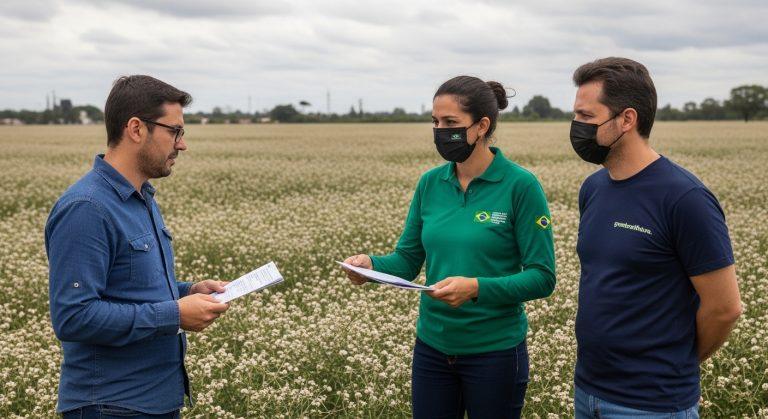
Deforestation and land-use change in Brazil are driven by commodity expansion and rural livelihoods. The push to convert forest to pasture or cropland yields short-term gains for producers but heightens exposure to climate risk, currency volatility, and international market volatility that, in turn, affects smallholders. Climate change intensifies rainfall extremes and drought cycles that compromise yields, water security, and river health. A pragmatic policy approach would align incentives—for example, tying subsidies or credit lines to verifiable conservation outcomes, expanding payment for ecosystem services programs, and promoting agroforestry and regenerative practices that reduce emissions while maintaining farm income. Local communities and Indigenous groups should be central to governance, ensuring that conservation finance benefits those most connected to the land and its water cycles.
Urban planning and the forests-rivers nexus
Urban areas absorb shocks from floods and heat waves, and many Brazilian cities lack infrastructure that can cope with intensified rainfall. Integrating green infrastructure—permeable surfaces, restored riparian zones, and urban forests—into planning can reduce flood risk and improve air quality. At the watershed scale, protecting headwaters, preserving wetlands, and restoring river corridors improves water security for cities such as Sao Paulo and its surrounding regions, while reducing sediment load that affects hydroelectric systems and fisheries downstream. The urban-rural interface also matters: policies that reward sustainable land management in rural zones can prevent spillovers of deforestation and fire risk into cities, contributing to more predictable urban services and resilience across metropolitan regions.
Actionable Takeaways
- Strengthen cross-agency policy coherence to align planning, licensing, and enforcement across federative levels.
- Scale community-based monitoring and citizen science to fill gaps in official coverage and enforce local conservation commitments.
- Expand nature-based solutions in urban and rural planning, prioritizing water-sensitive design and ecosystem restoration.
- Link agricultural subsidies, credit, and insurance to verifiable sustainability and deforestation-free commitments.
- Invest in data sharing and transparent reporting to monitor progress, risks, and outcomes in near real time.
Source Context
Contextual sources for this analysis include recent media reports on environmental enforcement and climate-related disasters in Brazil.
- Environmental Police seize endangered cacti smuggled by foreign tourists at São Paulo airport
- Brazil flood survivors coverage (WRAL)
- Brazil flood survivors: update on relief and recovery efforts (Telegraph-Herald)
From an editorial perspective, separate confirmed facts from early speculation and revisit assumptions as new verified information appears.
Track official statements, compare independent outlets, and focus on what is confirmed versus what remains under investigation.
For practical decisions, evaluate near-term risk, likely scenarios, and timing before reacting to fast-moving headlines.
Use source quality checks: publication reputation, named attribution, publication time, and consistency across multiple reports.
Cross-check key numbers, proper names, and dates before drawing conclusions; early reporting can shift as agencies, teams, or companies release fuller context.
When claims rely on anonymous sourcing, treat them as provisional signals and wait for corroboration from official records or multiple independent outlets.