
Climate Change And Its Drastic Effect On Biodiversity What We Stand To Lose
Updated: April 9, 2026
From the Amazon basin to Brazil’s urban perimeters, the brazilian Environment Brazil agenda has emerged as a defining test of policy, finance, and social resilience. This analysis traces how climate risks, green investments, and governance choices interact to shape outcomes for ecosystems and communities across Brazil, and why the next 24 months may prove decisive for the country’s environmental trajectory.
Policy, Investment, and Climate Risk
Under the current administration, Brazil has signaled a renewed focus on aligning environmental policy with finance. Analysts note that Brazil can harness large-scale sustainable investment to underwrite conservation, reforestation, and low-emission development, but success depends on coherent oversight across energy, forestry, and agricultural sectors. Recent coverage highlights the scale of mobilization planned for Lula’s term, including tens of billions of dollars in sustainable investment, while climate data point to intensifying extremes—heavy rainfall in some regions and drought in others—amplifying exposure for communities and ecosystems. The challenge is to convert policy promises into measurable outcomes, ensuring that public funds translate into forest protection, watershed management, and resilient rural livelihoods.
Rural livelihoods and biodiversity
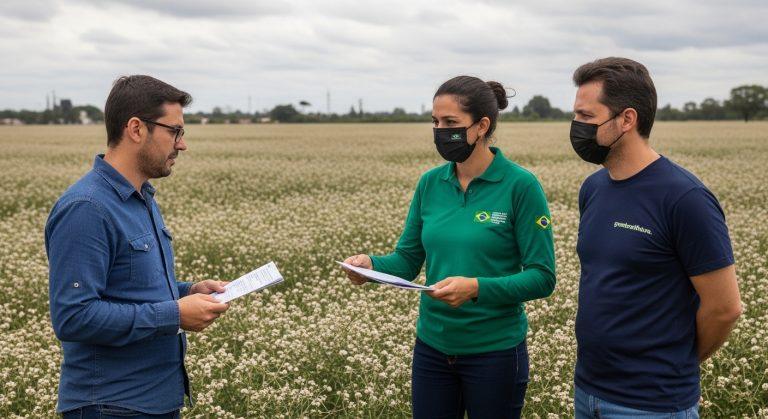
Policy design is most consequential where it touches the people most exposed to climate variability. Brazil’s rural populations depend on stable rainfall, healthy soils, and diverse ecosystems for food security and income. Conservation incentives, community-led forestry, and indigenous rights recognition can help reduce deforestation pressures and foster biodiversity reservoirs. Yet, without credible enforcement and transparent governance, financial incentives risk being captured by entrenched interests. This section examines how investments can create co-benefits—more stable harvests, cleaner water, and local employment—without accelerating social inequities.
Technology, land use, and governance
Technology-enabled monitoring—satellite land-use tracking, transparent reporting, and accessible data dashboards—plays a pivotal role in translating policy into practice. Governance reforms that streamline permitting, scrutinize land tenure, and strengthen anti-corruption measures are equally critical. The Brazilian experience includes ongoing enforcement challenges against illegal wildlife trade and unsustainable exploitation of natural resources, including high-profile cases that underscore the need for robust regulatory frameworks. By integrating technology with participatory governance, Brazil can improve forest surveillance, restore degraded areas, and build public trust in environmental programs.
Source Context
- Mongabay coverage: wildlife trade and enforcement in Brazil
- Valor coverage: rainfall and climate-disaster deaths in Brazil
- Reuters: Brazil mobilizes billions in sustainable investments
Actionable Takeaways
- Clarify long-term funding commitments for conservation and sustainable development, with transparent milestones and independent oversight.
- Strengthen enforcement against illegal wildlife trade and deforestation through coordinated interagency teams and community engagement.
- Invest in community-led green projects that create local jobs, improve watershed health, and diversify rural livelihoods.
- Expand technology-enabled monitoring and open-data platforms to enhance forest governance and public accountability.
- Align Brazil’s policy framework with international climate-finance standards to attract credible private investment responsibly.
From an editorial perspective, separate confirmed facts from early speculation and revisit assumptions as new verified information appears.
Track official statements, compare independent outlets, and focus on what is confirmed versus what remains under investigation.
For practical decisions, evaluate near-term risk, likely scenarios, and timing before reacting to fast-moving headlines.
Use source quality checks: publication reputation, named attribution, publication time, and consistency across multiple reports.
Cross-check key numbers, proper names, and dates before drawing conclusions; early reporting can shift as agencies, teams, or companies release fuller context.
When claims rely on anonymous sourcing, treat them as provisional signals and wait for corroboration from official records or multiple independent outlets.
Policy, legal, and market implications often unfold in phases; a disciplined timeline view helps avoid overreacting to one headline or social snippet.
Local audience impact should be mapped by sector, region, and household effect so readers can connect macro developments to concrete daily decisions.
Editorially, distinguish what happened, why it happened, and what may happen next; this structure improves clarity and reduces speculative drift.
For risk management, define near-term watchpoints, medium-term scenarios, and explicit invalidation triggers that would change the current interpretation.
Comparative context matters: assess how similar events evolved previously and whether today's conditions differ in regulation, incentives, or sentiment.
Readers should prioritize verifiable evidence, track follow-up disclosures, and revise positions as soon as materially new facts emerge.