
Eco Innovation How Technology Is Leading The Fight Against Climate Change
Updated: April 9, 2026
Brazil’s environmental policy is at a crossroads where climate risk, rural livelihoods, and global finance collide. This analysis examines how the environmental Environment Brazil framing shapes policy choices, market signals, and community resilience in forest-frontier areas. The aim is not to champion a single solution, but to illuminate the causal links between governance, incentives, and everyday decisions that determine whether Brazil can bend the curve toward sustainability.
Context: policy, governance, and the jagged path to decarbonization
The Brazilian policy landscape blends federal directives, state-level experimentation, and municipal implementation. With forest stewardship and biodiversity protection resting on multifaceted statutes—such as land-tenure rules, protected-area designations, and forest-code provisions—the state’s capacity to enforce norms often hinges on budget cycles, technical staff, and local political will. In this environment, policy shifts reverberate through land-use decisions, subscription to environmental compliance schemes, and the timing of public investments in green infrastructure. When enforcement capacity grows, compliance signals can steer land users toward lower-deforestation practices; when it falters, incentives for illegal clearing and weak MRV (monitoring, reporting, and verification) proliferate. This dynamic creates a feedback loop: regulatory clarity reduces risk for responsible actors, while ambiguity sustains uncertainty for both community stewards and large-scale agribusiness operators. The resulting mix shapes whether Brazil can translate climate commitments into tangible land-use outcomes rather than rhetorical theater.
Beyond national lines, international markets and donor programs increasingly reward transparent governance and credible baselines. The practical takeaway is that governance—more than slogans—becomes the clearest predictor of long-term environmental performance. In this sense, environmental Environment Brazil is a frame for questions about capacity, accountability, and the ability to align diverse interests around shared ecological goals. The key causal chain is straightforward: stronger institutions and clearer rules raise the returns to sustainable land use, while weak institutions lower the cost of illegal activity and thus erode collective action. In a country as large and varied as Brazil, the challenge is not only setting rules but ensuring they stick across dozens of biomes, thousands of communities, and a broad spectrum of economic actors.
Economic levers and the politics of conservation
The economics of conservation in Brazil sit at the intersection of commodity markets, public finance, and social legitimacy. On one side, cattle ranching and soy production drive substantial regional economies, often in frontier zones where land tenure disputes intersect with rising global demand. On the other, environmental stewardship can be reframed as an asset class: carbon crediting, biodiversity offsets, and payments for ecosystem services promise to channel private capital toward forested landscapes that simultaneously support rural livelihoods. The practical policy challenge is to design incentives that align private incentives with public goods—namely, lower emissions, preserved habitats, and resilient rural communities.
One pathway is to expand credible supply-chain transparency and traceability, so buyers can reward producers who maintain intact forests or adopt regenerative practices. Another is to scale green-finance instruments that fund restoration, agroforestry, and climate-smart agriculture while providing predictable revenue streams for land stewards. However, these mechanisms must be coupled with robust governance: clear rules for how funds are allocated, verifiable MRV systems, and transparent governance to prevent leakage or misallocation. In short, markets can be powerful accelerants for positive change, but only when backed by credible institutions, accessible data, and credible enforcement—three elements that historically become the bottleneck in the Brazilian context.
Policy alignment across branches of government—federal mandates, state pilot programs, and municipal enforcement—also matters. When alignment occurs, risk premia associated with deforestation and non-compliance fall, and credit lines or subsidy programs can be steered toward sustainable producers. When alignment fractures, uncertainty rises, and businesses revert to the lowest-cost option, which frequently means expanding the footprint of agricultural land—even at environmental cost. The scenario is not predetermined; it is shaped by budget allocations, political leadership, and the measurable progress of conservation initiatives on the ground.
Communities, rights, and enforcement at the forest frontier
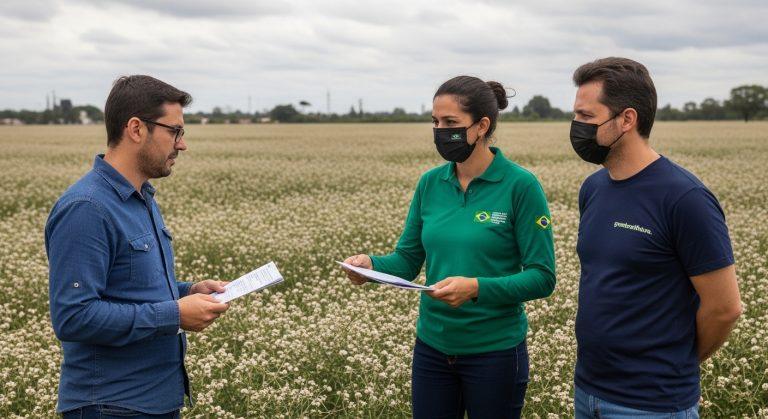
Brazil’s forest frontiers are home to countless communities whose livelihoods depend on stable ecosystems and predictable governance. Indigenous territories and traditional communities often exemplify long-standing stewardship, yet their rights require robust recognition and protection in policy design. Enforcement challenges—ranging from illegal logging to encroachment—illustrate how governance gaps translate into real ecological risk. When communities are empowered with secure land tenure, access to legal avenues for resource use, and meaningful participation in decision-making, conservation outcomes improve because stewardship is anchored in local legitimacy. Conversely, when enforcement is selective or punitive rather than collaborative, mistrust grows, and communities may disengage from formal channels, increasing the likelihood of informal or unsanctioned exploitation.
Health, safety, and ecological resilience intersect here. Public health and environmental health are linked in complex ways: polluted waterways, degraded habitats, and fragile soils can undermine livelihoods and safety. A practical approach recognizes communities as co-managers of landscapes, with rights to participate in zoning decisions, benefit-sharing arrangements, and monitoring efforts. Such an approach doesn’t just reduce environmental risk; it also strengthens social resilience by dispersing risk and empowering local leadership. The result is a more durable model of conservation—one grounded in governance equity, transparent accountability, and credible stewardship that aligns environmental goals with human development objectives.
Future scenarios: a pragmatic pathway for a green Brazil
Looking ahead, two prevailing trajectories emerge. In the first, Brazil deepens governance capacity, expands protected areas and Indigenous lands with durable tenure, and links payments for ecosystem services to measurable outcomes. In this scenario, MRV systems improve, private capital flows toward sustainable practices, and rural communities gain steadier incomes through diversified, low-deforestation crops and restoration projects. The environmental Environment Brazil frame becomes a predictor of success: stronger institutions, better data, and transparent incentives drive land-use decisions that favor conservation without sacrificing livelihoods.
In the second trajectory, governance remains fragmented, enforcement remains inconsistent, and market incentives fail to reward true conservation. Deforestation pressures intensify, public funds are constrained, and communities bear the brunt of policy gaps. In that case, biodiversity loss, higher climate risk, and reputational costs to Brazil in international markets become more likely. The critical difference resides in political will and operational capacity—whether the state can translate ambitious targets into day-to-day actions that touch farmers, indigenous leaders, and urban voters alike. Between these extremes lies a continuum of policy experiments: land-tenure reform pilots, agroforestry incentives, community-led monitoring programs, and cross-border cooperation on biodiversity corridors. The pragmatic message is clear—incremental, well-targeted reforms can compound into meaningful progress if they are designed with local partners and measured with rigorous, public data.
Actionable Takeaways
Source Context
For further background on Brazil’s environmental governance and related topics, see these resources: