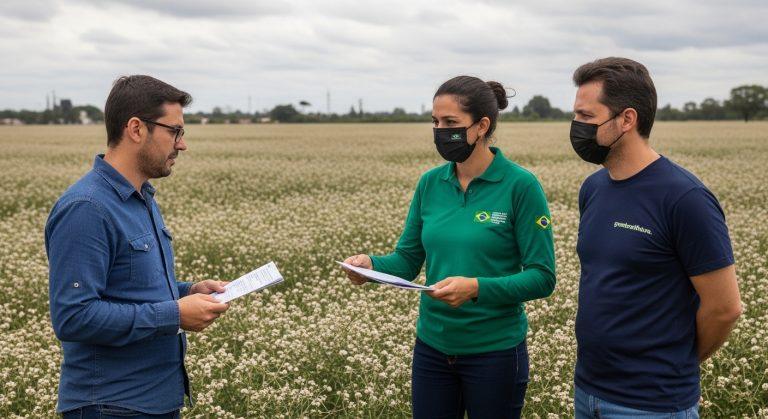

Aerial view of the Brazilian Amazon with rivers, forest, and small sustainable farms illustrating climate resilience.
Updated: April 9, 2026
In brazil’s Environment Brazil, the interplay of climate pressures, deforestation, and urban planning is unfolding in real time as communities brace for the flood season. This analysis examines how floods reveal policy and planning gaps while outlining practical paths toward resilience across Brazil’s diverse regions.
Context: climate risk and urban vulnerability
Across Brazil, extreme rainfall and shifting weather patterns are intensifying flood and landslide risk, especially in low-lying urban zones and hillside communities. Scientists warn that climate change interacts with long-standing land-use pressures—deforestation in upper basins, fragmented drainage, and informal settlements—to amplify damage when rivers swell. In many cities, aging drainage networks, limited green space, and ongoing urban sprawl reduce the pace at which water can move away from communities. The result is a pattern where a few hours of heavy rain lead to days of disruption, with households bearing evacuation costs, lost livelihoods, and housing damage. The crisis thus becomes a mirror for Brazil’s broader environmental and development challenges—how to balance growth with nature-based risk reduction.
Policy gaps and infrastructure resilience
Policy coherence across federal, state, and municipal levels remains a central hurdle. Disaster response often arrives after impact, rather than through proactive planning that places weather forecasts, land-use zoning, and floodplain restoration into everyday governance. Infrastructure investment has lagged behind the scale of risk: drainage systems in growing cities may be undersized; riverbanks lack protective vegetation; and natural floodplains that could absorb surge are increasingly compromised by development. Yet there are signs of momentum—federal authorities announcing coordinated relief and data sharing, and researchers urging climate-informed planning that links river basin management to urban resilience. The key question is not only how much to spend, but how to spend it with transparent metrics that measure risk reduction, not just relief outcomes.
Economic and social costs and equity
Floods expose structural inequities: poorer households in informal settlements experience the steepest losses, while rural communities dependent on small-scale farming face yield shocks that ripple through regional markets. When schools close and roads flood, remote communities face isolation and delayed aid. The economic case for resilience is not only humanitarian but practical: investments in flood forecasting, resilient housing, and diversified livelihoods can reduce long-run costs and stabilize local economies. In Brazil’s diverse landscapes, social protection programs and community-led adaptation efforts can help ensure that mitigation does not leave vulnerable groups behind.
Rethinking land use and conservation
A more resilient path requires rethinking land use, water systems, and conservation strategies. Restoring floodplains and riparian buffers allows rivers to carry and release water more gradually, buffering downstream communities. Reforestation and forest restoration—particularly in the Atlantic Forest and other sensitive basins—can improve soil stability, regulate water cycles, and reduce runoff. Urban planning must integrate nature-based solutions, such as green roofs, permeable pavements, and decentralized drainage, so cities can absorb rainfall without resorting to emergency evacuations. The approach blends science, policy, and local knowledge to craft a more adaptive economy that aligns growth with ecological limits rather than against them.
Actionable Takeaways
- Residents: stay informed through local alerts, prepare a household flood plan, and secure essential documents and valuables in a high, dry place.
- Communities: build neighborhood watch-style early warning networks and restore small green corridors that guide water away from homes and schools.
- Municipalities: integrate climate projections into zoning and infrastructure design, upgrade drainage, and require resilient construction standards in new housing.
- State and Federal: align disaster risk management with environmental policies, fund nature-based solutions, and improve cross-agency data sharing for faster response.
- Businesses and agriculture: assess supply-chain exposure to flood events, adjust operations to local risk, and invest in soil health and water stewardship to bolster resilience.
Source Context
For background on recent flood response and leadership visuals in Brazil, see:
- Iosco County News Herald: Brazil’s Lula visits flood zone as death toll from landslides hits 70
- Branson Tri-Lakes News: Brazil’s Lula visits flood zone as death toll from landslides hits 70
- Telegraph Herald: Search for Brazil flood survivors continues as death toll rises to 64
From an editorial perspective, separate confirmed facts from early speculation and revisit assumptions as new verified information appears.