
Addressing Climate Change How Energy Transition Contributes To A More Sustainable Future
Updated: April 9, 2026
In Brazil, the banco Environment Brazil stands at the intersection of finance, climate risk awareness, and policy design, shaping how sustainability commitments translate into lending, project selection, and community resilience. As flood-prone cities, drought belts, and shifting land use intensify pressures on infrastructure and livelihoods, stakeholders look to banks not only as funders but as risk navigators whose choices direct capital toward adaptation, restoration, and low-emission transition. This deep-dive analyzes how banking models, public policy, and market incentives interact to define Brazil’s environmental economy—and what that means for citizens, ecosystems, and investors alike.
Context: Banking and climate finance in Brazil
Brazil has witnessed a notable expansion in climate-oriented finance, including sustainability-linked lending, green bonds, and blended-finance mechanisms aimed at conservation, energy transition, and resilient infrastructure. Financial institutions increasingly calibrate risk models to account for climate scenarios that include flood exposure in urban centers, drought stress in agricultural regions, and shifting land-use values in the Amazon and Cerrado. In this environment, the banking sector faces a dual imperative: mobilize capital for adaptation and low-carbon growth while avoiding mispricing of risk that could trigger asset write-downs or sticky nonperforming loans. The evolution of these dynamics is shaping how institutions identify viable projects, engage with communities, and report on impact to regulators and investors.
Risks, communities, and ecosystems
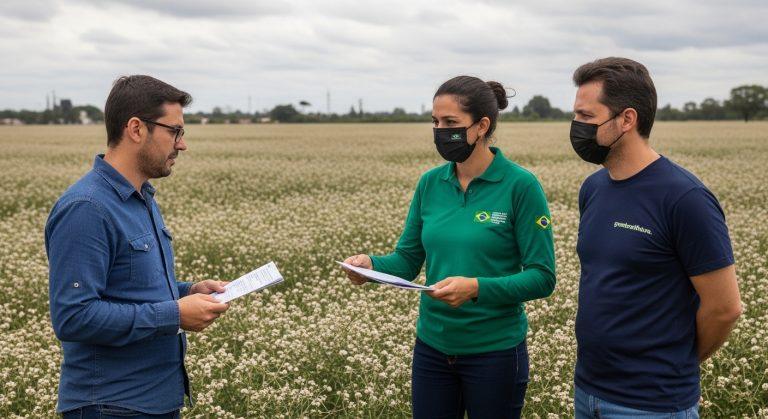
The climate reality in Brazil translates into tangible risks for assets, supply chains, and local governance. Extreme rainfall and landslides threaten infrastructure, housing, and rural livelihoods, complicating collateral valuation and insurance access for borrowers. Simultaneously, ecosystems under pressure—from coastal zones to the Amazon and Atlantic forest—limit production resilience and create feedback loops that influence commodity prices, water security, and public health. Banks that embed social resilience into lending criteria can help communities access credit for adaptation projects—such as flood-proofing, watershed restoration, and drought-resistant farming—thereby reducing vulnerability while creating longer-term credit and repayment latitude. The result is a more durable, though more complex, value proposition for financiers and clients alike.
Policy signals, corporate strategy, and market dynamics
Policy architecture at federal, state, and municipal levels increasingly rewards risk-informed, climate-resilient investing. Government programs and international finance partners are pushing for more robust environmental disclosure, integration of climate risk into stress testing, and greater alignment between public funds and private capital for adaptation and decarbonization. Banks respond by refining risk appetite, expanding climate-related financial disclosures, and developing partnerships with civil society, insurers, and infrastructure developers. The broader market is learning to value resilience as a competitive differentiator: borrowers with credible adaptation plans, transparent governance, and measurable emission reductions qualify for better terms and longer-tenor facilities. As these shifts unfold, Brazil’s banking sector could pivot from risk avoidance toward risk-informed growth that rewards early action and credible impact reporting.
Actionable Takeaways
- Invest in climate risk data and scenario analysis to align portfolios with long-term resilience goals, especially in flood-prone and drought-affected regions.
- Incorporate robust ESG due diligence into lending, focusing on governance quality, community impact, and credible decarbonization pathways for borrowers.
- Expand access to green finance for smallholders and local authorities implementing adaptation, nature-based solutions, and resilient infrastructure projects.
- Strengthen collaboration across banks, insurers, and public agencies to improve risk pooling, affordable insurance options, and disaster response financing.
- Enhance disclosure standards and reporting cadence to ensure transparency for investors, regulators, and civil society about climate exposure and progress toward targets.
Source Context
From an editorial perspective, separate confirmed facts from early speculation and revisit assumptions as new verified information appears.
Track official statements, compare independent outlets, and focus on what is confirmed versus what remains under investigation.
For practical decisions, evaluate near-term risk, likely scenarios, and timing before reacting to fast-moving headlines.
Use source quality checks: publication reputation, named attribution, publication time, and consistency across multiple reports.
Cross-check key numbers, proper names, and dates before drawing conclusions; early reporting can shift as agencies, teams, or companies release fuller context.
When claims rely on anonymous sourcing, treat them as provisional signals and wait for corroboration from official records or multiple independent outlets.