
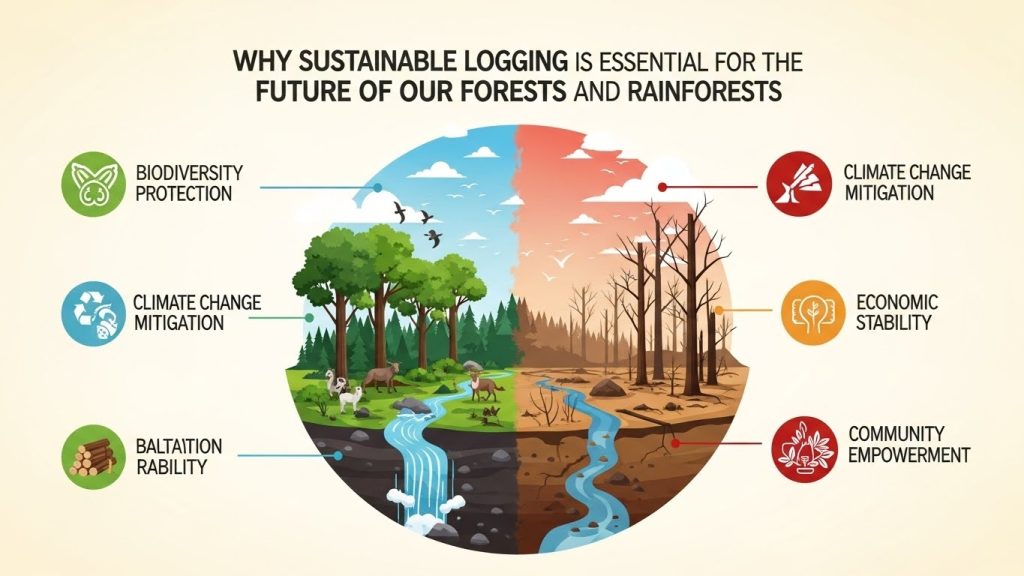
Why Sustainable Logging is Essential for the Future of Our Forests and Rainforests
Forests and rainforests, often referred to as the lungs of the Earth, are vital ecosystems that support biodiversity, regulate the climate, and provide resources for countless species, including humans. However, the unsustainable logging practices that have prevailed for decades pose a severe threat to these precious environments. Sustainable logging emerges as a crucial approach to ensuring the longevity and health of our forests and rainforests. This blog post delves into why sustainable logging is essential and how it can be implemented effectively to safeguard our planet’s future.
Understanding Sustainable Logging
Sustainable logging refers to the practice of harvesting trees in a manner that maintains the forest’s ecological balance, ensuring that the ecosystem can regenerate and continue to provide its ecological services. It involves a combination of techniques and strategies aimed at minimizing environmental impact while maximizing resource efficiency.
The key principles of sustainable logging include selective logging, where only certain trees are cut down; maintaining biodiversity by preserving habitats for wildlife; and ensuring that the rate of logging does not exceed the forest’s natural growth rate. These principles not only protect the forest environment but also support the livelihoods of communities that depend on forest resources.
The Environmental Importance of Forests and Rainforests
Forests and rainforests play a critical role in maintaining the Earth’s environmental equilibrium. They act as carbon sinks, absorbing carbon dioxide and releasing oxygen, which helps mitigate climate change. These ecosystems are also home to an immense variety of flora and fauna, many of which are endemic and cannot be found elsewhere.

For instance, rainforests alone are estimated to contain about half of the world’s plant and animal species, despite covering only about 6% of the Earth’s surface. The destruction of these habitats can lead to the loss of biodiversity, affecting global ecological stability. By adopting sustainable logging practices, we can help ensure that forests continue to thrive and fulfill their role in the Earth’s biosphere.
The Economic Aspect of Sustainable Logging
While the environmental benefits of sustainable logging are clear, it is also important to consider the economic implications. Forests provide essential resources such as timber, which is a significant economic driver for many countries. Unsustainable logging practices can lead to short-term financial gains but ultimately result in resource depletion, harming both the environment and the economy in the long run.
Sustainable logging ensures that timber and other forest products can be harvested continuously without compromising the health of the forest. This approach supports the economy by creating stable, long-term jobs and encouraging investment in forest management. Countries that adopt sustainable practices can also benefit from international certification programs like the Forest Stewardship Council (FSC), which can open up new markets and increase the value of forest products.
Social Benefits of Sustainable Logging
The social dimension of sustainable logging cannot be overlooked. Many indigenous communities and local populations rely on forests for their livelihoods, culture, and identity. Unsustainable logging practices often lead to conflicts over land rights and the displacement of these communities.
By prioritizing sustainability, logging operations can ensure that local communities are involved in decision-making processes, helping to protect their rights and interests. This participatory approach can lead to more equitable resource distribution and foster a sense of ownership and stewardship among local populations.
Challenges in Implementing Sustainable Logging
Despite the clear benefits, implementing sustainable logging practices is not without challenges. One of the main obstacles is the lack of awareness and education about sustainable methods among logging companies and local communities. Additionally, illegal logging activities continue to undermine efforts to promote sustainability.
Governments and organizations must work together to create robust policies and frameworks that support sustainable logging. This includes enforcing regulations, providing incentives for sustainable practices, and investing in research and technology to improve logging methods. Public awareness campaigns can also play a crucial role in promoting sustainable logging and encouraging consumers to choose sustainably sourced products.
Case Studies: Successful Sustainable Logging Initiatives
Several regions around the world have successfully implemented sustainable logging practices, setting examples for others to follow. In Costa Rica, for instance, the government has established a national strategy that combines forest conservation with sustainable logging and ecotourism. This approach has not only preserved Costa Rica’s rich biodiversity but has also contributed significantly to the country’s economy.
Another example is the Solomon Islands, where community-based forest management initiatives have empowered local populations to manage their forest resources sustainably. These initiatives have led to improved forest health and provided economic benefits to the communities involved.
These case studies demonstrate that sustainable logging is not only feasible but also beneficial when implemented effectively. They highlight the importance of collaboration between governments, communities, and the private sector in achieving sustainability goals.
Conclusion: The Path Forward
Sustainable logging is essential for preserving the health and diversity of our forests and rainforests. It offers a balanced approach that ensures economic development while protecting the environment and supporting local communities. For sustainable logging to become the norm, it is imperative to raise awareness, enforce regulations, and invest in technology and education.
As individuals, we can also contribute by supporting companies and products that adhere to sustainable practices. By making informed choices and advocating for responsible forest management, we can help ensure that our forests remain vibrant and vital for generations to come. The future of our planet’s forests and rainforests depends on our collective efforts to embrace sustainability in all aspects of forest management.
For more information on sustainable forest management practices and their global impact, read about the FAO’s initiatives on forestry or explore the IUCN’s forest conservation efforts.
The Role of Technology in Advancing Sustainable Logging
Technology plays a pivotal role in advancing sustainable logging practices. Innovations in forest management, monitoring, and logging techniques can significantly reduce the environmental impact of timber harvesting. For example, the use of satellite imagery and drones enables precise mapping and monitoring of forest resources, allowing for more accurate assessments of forest health and the effects of logging activities.
Moreover, the development of improved logging equipment, such as reduced-impact logging machinery, helps minimize damage to surrounding trees and soil. These technologies not only enhance the efficiency of logging operations but also support the principles of sustainability by reducing waste and conserving the forest ecosystem.
Investing in technology for sustainable logging is a promising pathway to ensure that we meet our current needs without compromising the ability of future generations to meet theirs. As technology continues to evolve, it holds the potential to revolutionize the way we manage and conserve our forest resources.
Education and Community Involvement
Education is a cornerstone of sustainable logging. By educating both industry stakeholders and the public about the importance of sustainable practices, we can foster a culture of responsibility and stewardship. Training programs for loggers and forest managers can provide them with the skills and knowledge needed to implement sustainable techniques effectively.
Community involvement is equally important. Engaging local communities in forest management not only ensures that their needs and perspectives are considered but also empowers them to actively participate in conservation efforts. Community forestry initiatives, where local groups are given the rights to manage and benefit from forest resources, have proven successful in numerous regions, promoting sustainable practices and enhancing livelihoods.
By combining education with community involvement, we can create a more informed and engaged society that values and protects its forest resources.
Policy and Legislation for Sustainable Logging
Strong policy and legislation are crucial for promoting and enforcing sustainable logging practices. Governments play a key role in establishing the legal frameworks that govern forest management and logging activities. Effective policies should include clear guidelines for sustainable practices, mechanisms for monitoring and enforcement, and penalties for non-compliance.
International cooperation is also essential, as forests and rainforests often span national borders. Collaborative efforts, such as treaties and agreements, can help address cross-border challenges like illegal logging and trade in unsustainably sourced timber.
Efforts to promote sustainable logging should also focus on providing incentives for compliance. This could include tax breaks, subsidies, or access to premium markets for companies that adhere to sustainable practices. By creating a regulatory environment that rewards sustainability, governments can encourage more widespread adoption of responsible logging methods.
The Global Impact of Sustainable Logging
The global impact of sustainable logging extends beyond individual ecosystems. By promoting responsible forest management, we can contribute to broader environmental goals, such as mitigating climate change, conserving biodiversity, and protecting water resources.
Sustainable logging also supports the United Nations Sustainable Development Goals (SDGs), particularly those related to life on land, climate action, and responsible consumption and production. By aligning logging practices with these global objectives, we can ensure that forest resources are used in a way that benefits both people and the planet.
Ultimately, the shift towards sustainable logging is a vital component of a more sustainable and resilient future. It requires collaboration across sectors and borders, but the rewards—healthy forests, thriving communities, and a stable climate—are well worth the effort.
For further insights into how sustainable practices are being implemented worldwide, consider exploring the Greenpeace’s work in forest conservation or the Conservation International’s initiatives on sustainable landscapes.
About the Author