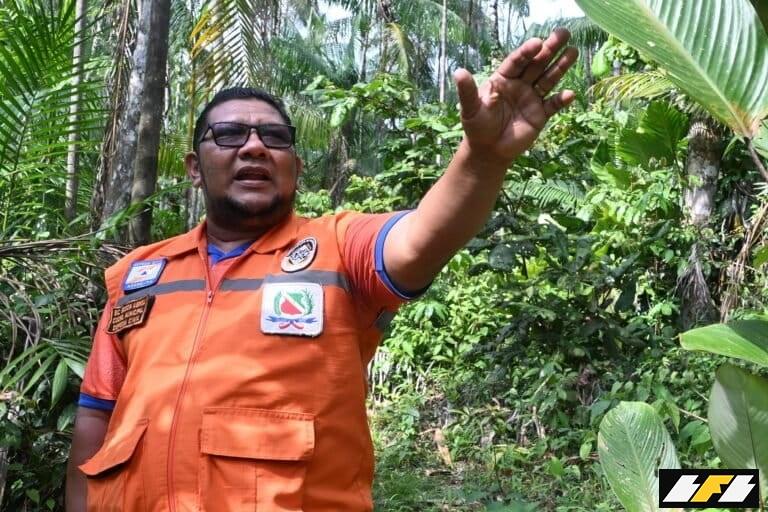

- Lacking trucks and gear, a civil servant once destined for the priesthood now uses WhatsApp groups to direct volunteers who must manually carry river water through dense forest to tackle record blazes deep in an Amazonian town five times the size of New York City.
- Once rare, record-breaking wildfires destroyed millions of hectares across the Brazilian Amazon in recent years, leaving surviving forests increasingly fragile and susceptible to recurring blazes.
- Only 16% of Amazonian municipalities in Brazil have operational military fire brigades, forcing rural towns to rely on underfunded local offices and unpaid volunteers to defend the rainforest.
ACARÁ, Brazil — In August 2024, a wildfire broke out in Acará, a rural municipality in Brazil’s eastern Amazon state of Pará. Local civil defense coordinator Edson Abreu dos Santos, 48, knew he had to act quickly. Acará has no fire brigade, no water trucks, no firefighting drones and no helicopters. And because the fire was burning along the stream Itapecuru, accessible only by boat, vehicle support was out of the question.
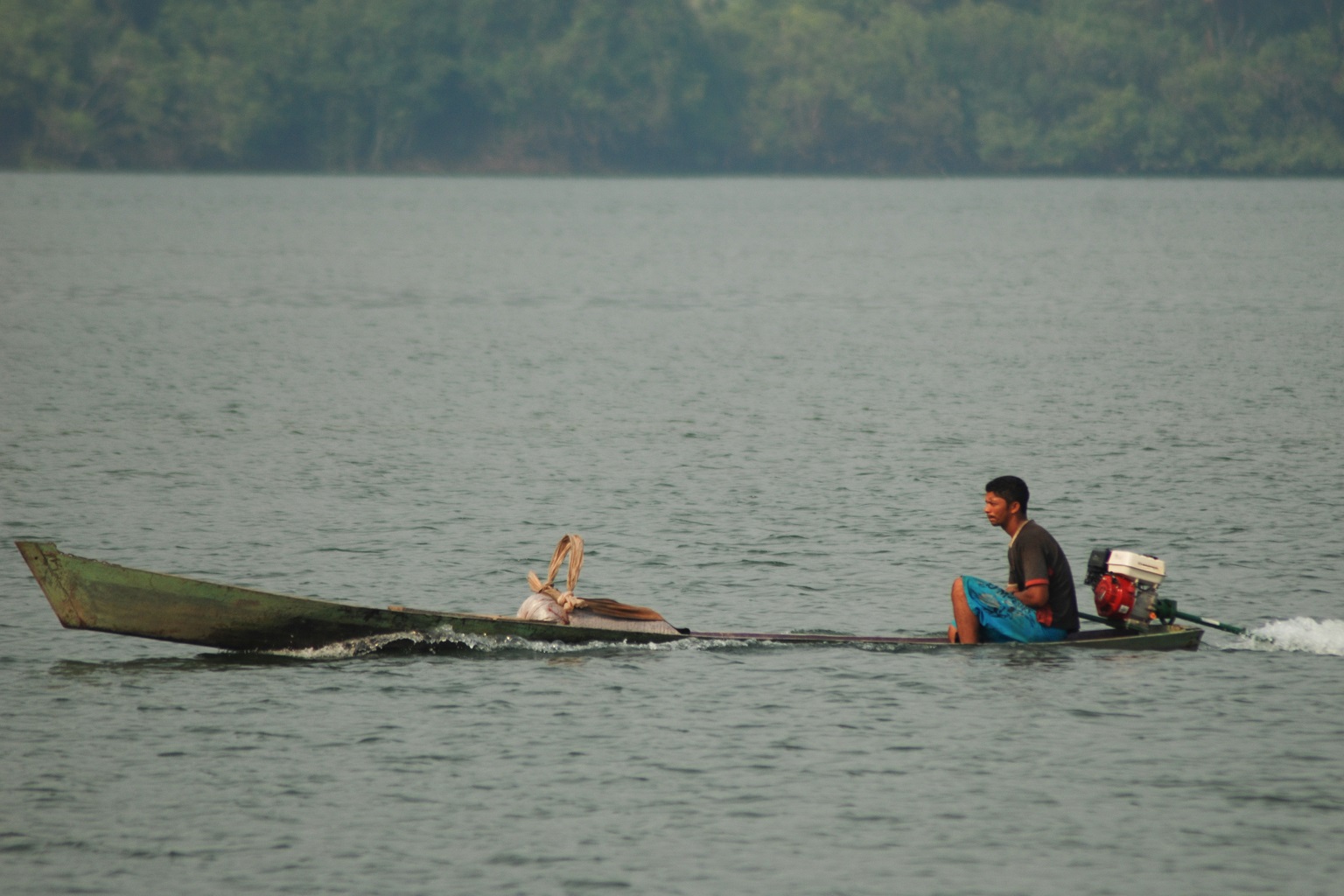
As the flames advanced into the forest, Santos set up an improvised command post in a ribeirinha (riverside) stilt house. From the porch, he used WhatsApp to message dozens of community members asking for help. More than 100 neighbors answered the call, pulling up to the house in rabetas — small, narrow wooden boats designed to navigate the winding Amazonian rivers.
He instructed volunteers to fill 20-liter (5.3-gallon) water barrels — known locally as carotes — with river water. Forming a single line, they carried the containers on their shoulders for nearly a kilometer (0.6 mile) into the dense forest, throwing the water on the flames one barrel at a time. Many made the trek in flip-flops, while the men worked shirtless due to the intense heat.
The small but steady effort managed to hold the line of fire until 30 firefighters arrived from a neighboring municipality, Macarena, more than 100 km (62 miles) away. They brought support in the way of backpack sprayers and a single water hose. In a makeshift setup, they patched the hose to a local irrigation line, extending it far enough to pump water into a makeshift reservoir closer to the flames.
The system shortened the hike by foot, but most of the work continued to be done manually, hauling and throwing water by hand onto the flames. It took three days and three nights of intense work to bring the wildfire under control, and a full two weeks to extinguish it completely. By then, more than 60 hectares (148 acres) of forest had burned.
Santos still recalls that wildfire as one of the most challenging he has tackled to date.
“We were trying to fight a large wildfire with very little infrastructure, in an area that is incredibly difficult to reach,” he told Mongabay while revisiting the area in November 2025.
There was also something unusual about the fire. “This was a floodplain area, but the forest was so dry that it was like throwing gasoline on a spark,” he said. “The roots were burning underground, and when we thought we had put out the flames, they would suddenly pop up again farther ahead.”
He didn’t know at the time, but this was the first of many similar firefighting challenges he would face that year.
A calling meets a crisis
The municipality of Acará lies 116 km (72 mi) from the state capital of Belém, which hosted the COP30 climate conference in 2025. But it could well be a different world.
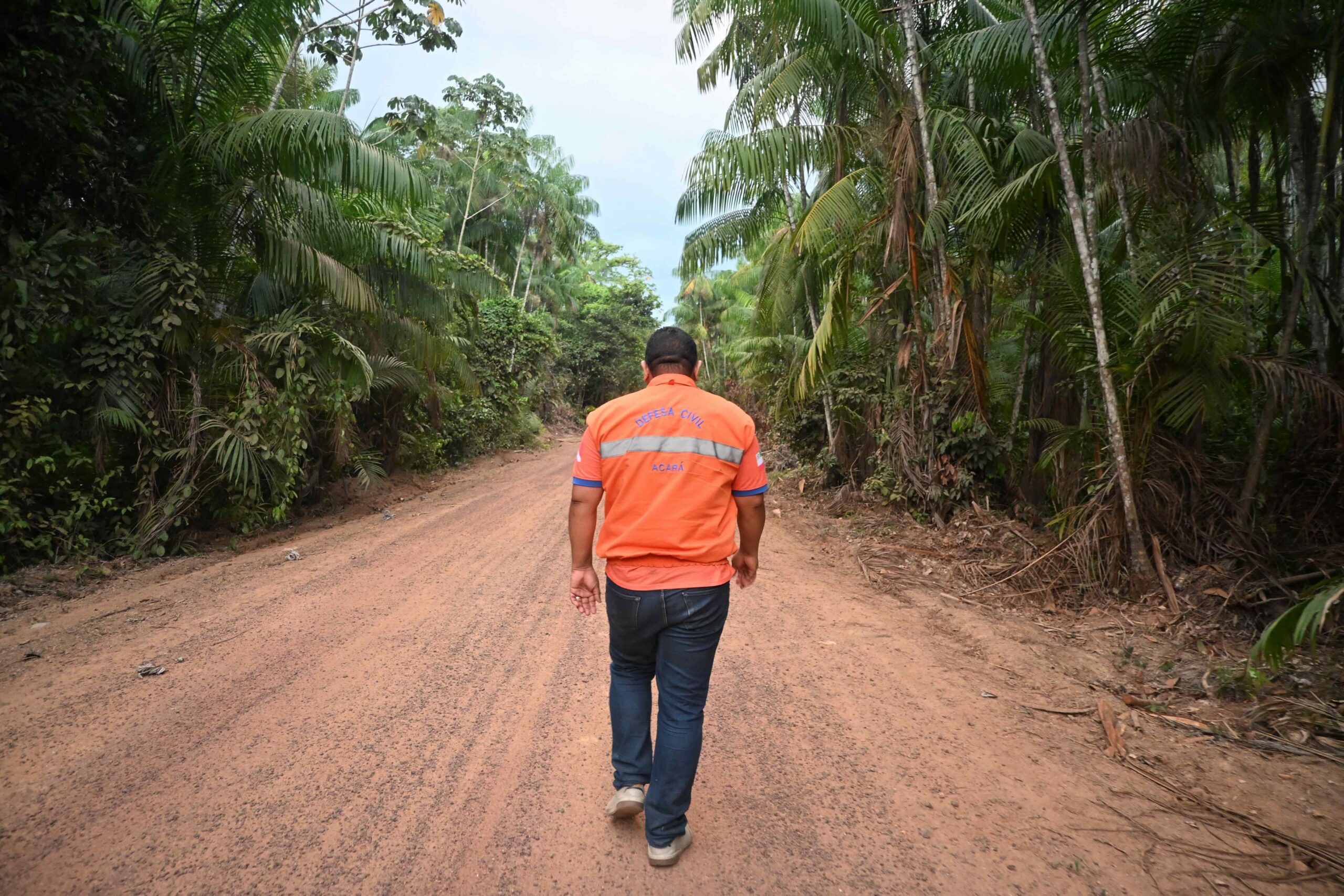
Largely rural, Acará spans a territory four times the size of Belém, with only a fraction of its population, and covers more than five times the area of New York City. Beyond a small urban center on the banks of the Acará River, most residents live in rural settlements reached only by dirt roads or by forest streams, known locally as igarapés.
The region is located in an increasingly fragmented stretch of the Brazilian Amazon, where patches of forest, farmland and settlements intertwine. From the north, the fast-expanding outskirts of Belém push the big city closer and closer. From the south, the Amazon’s arc of deforestation advances, with extensive soy plantations, cattle ranching and land speculation driving forest loss.
For generations, families in Acará have lived off the land, cultivating small plots of cassava, chile peppers and cacao, while harvesting forest nuts and fruits. As global demand has surged, açaí has become a staple of the local economy, accounting for about 40% of agricultural production. Pará state is currently the world’s largest exporter of the berry, with large quantities shipped to the United States and Europe.

Born and raised in Acará, Santos grew up in a household of 11 children, where education and faith were central. Several of his siblings went on to become teachers. He later moved to Belém, where he spent more than a decade acquiring undergraduate degrees in accounting and business, and two years in a seminary studying to become a priest.
His religious calling led him back to Acará and into public service, where he became the municipality’s public policy director. “I’m very grateful to God for the opportunity to help people,” he told Mongabay. “This is my life’s mission. It’s what I want to do every single day.”
In 2022, Santos was invited to lead a newly created Municipal Civil Protection and Defense Coordination Office (COMPDEC). The department is responsible for organizing emergency responses to natural disasters, including flooding and fires.
But when he took on the job, COMPDEC amounted to little more than a desk in city hall and a PDF describing its mission, with Santos as the only employee. “My first task was to figure out what the job actually was, and how to do it,” he said. “Little by little, I built the workflow. I asked for a computer, a printer and eventually a small car and a place to work,” he said from a warehouse that now serves as his office.
As major climate events began hitting the region in 2023, the limited infrastructure was quickly put to the test.

In January of that year, torrential rains during the Amazon wet season led to devastating flooding in Acará. The municipality declared a state of emergency, with dozens of families losing their homes and belongings. The incident prompted the federal government to classify the city as a high-risk area for flash floods and inundation due to its proximity to waterways.
The flooding was followed by months of severe drought in mid-2023 that rattled the Amazon and made international headlines — at the time considered the region’s worst drought in history.
Then, in January 2024, a storm with gusts of up to 100 kmh (62 mph) swept through Acará’s rural zone. “It was like a solid wall of wind pushing against everything it touched,” Santos recalled. “Luckily, there were no human casualties, but the wind brought down around 1.2 hectares [3 acres] of towering Brazil nut trees. You should have seen the aftermath. It was unbelievable.”
But when the Amazonian summer set in that year, the town saw its greatest challenge yet.
Worsening drought conditions brought record-low rainfall, combined with record-high temperatures. The unprecedented weather conditions affected 98.3% of municipalities in the Brazilian Amazon, with almost two-thirds of the region’s river basins experiencing losses in surface water, according to the Brazilian collaborative research network MapBiomas.
“We could tell something was different when it became unbearably hot, even for the Amazon,” Santos recalled. “The vegetation started to turn brown, trees started to die, small streams dried up and even people’s wells had no water. They had no water to drink.”
The dryness and heat triggered widespread wildfires. By the end of the year, almost 18 million hectares (44.5 million acres) — an area larger than the state of Florida — had burned within the Amazon, per MapBiomas data. Most of the burning occurred on forestland, driving widespread loss of biodiversity and threatening frontline communities.
Pará was the hardest-hit state in the region, with a total of 7.3 million hectares (18 million acres) burned. The municipality of Acará was consistently listed among the state’s most affected municipalities, often ranking in the top-10 monthly rankings for fire hotspots.

Small burns, big risks
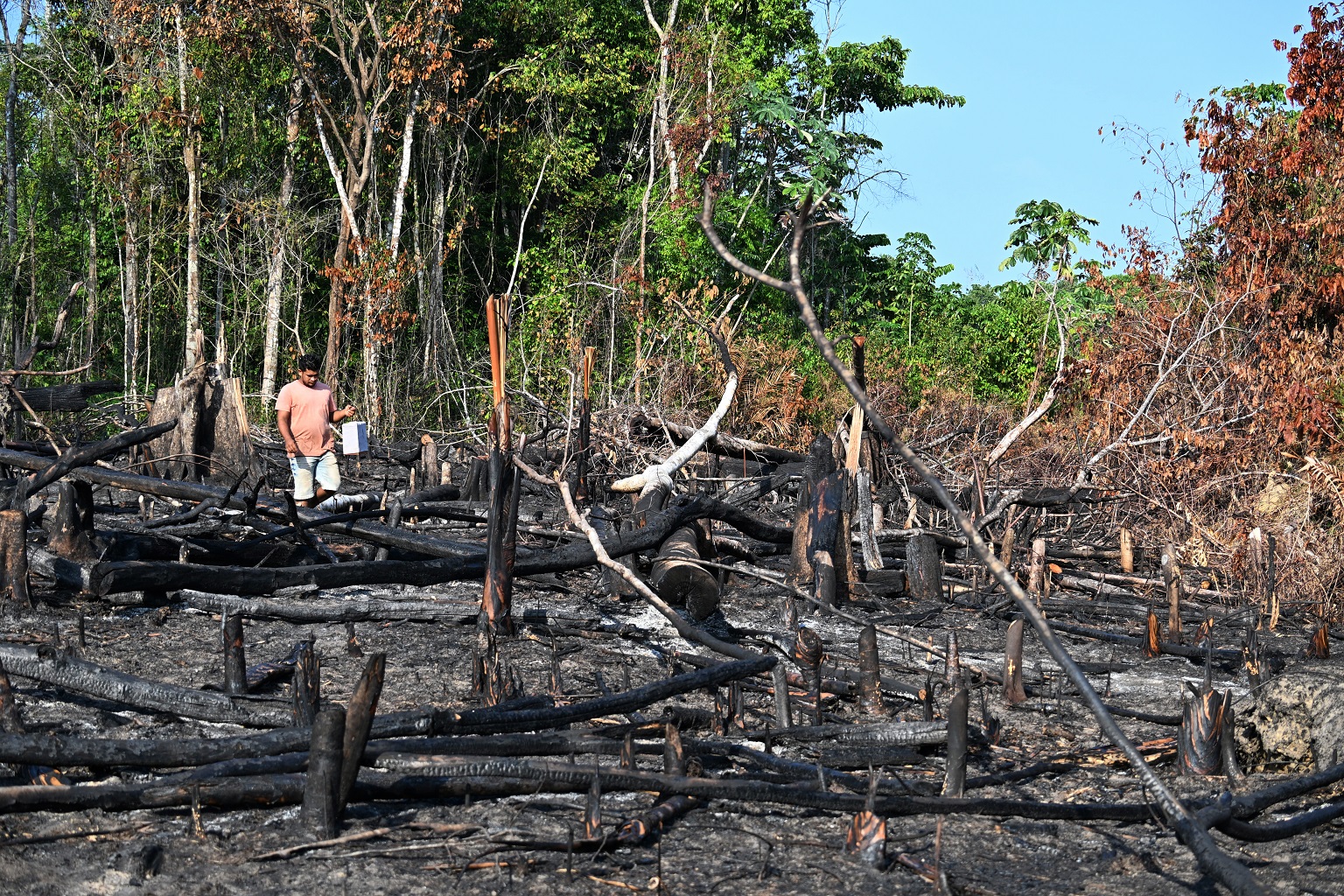
Even in a normal summer, small fires are common in Acará, with plumes of smoke easily visible from highways and riverbanks. For thousands of years, local residents have used fire to clear vegetation for seasonal crops. In these fields, known locally as roças, they plant short-cycle foods such as cassava for household consumption.
After an initial harvest, the land is often seeded with açaí trees, which can take up to five years to mature. Families continue this cycle each season, opening new cultivation plots, either by reusing old fields or clearing new forest. The result is frequent small fires, which, in an unusually hot and dry year, can spill over into neighboring forest areas.
In 2024, scientists found that humans were responsible for starting many of the record wildfires that year, not only for agricultural clearing, but also through land-grabbing and other criminal activity.
“It’s easy to criticize local burning practices, but they are not only cultural, they’re a necessity to local communities,” Acará’s environmental secretary, Sônia Elídia Reis Mota, told Mongabay from her office. “These crops are their subsistence. If they don’t burn, they won’t have anything to eat or won’t make enough money to buy food.”
While Brazilian legislation allows traditional populations to use fire for subsistence farming, these practices are subject to strict rules.
Brazil’s 2024 National Integrated Fire Management Policy spelled them out most clearly, limiting burns to agricultural areas and prohibiting the clearing of native vegetation. Burns must be avoided in periods of high temperatures, strong winds and low humidity. Communities are also required to implement firebreaks and other measures to prevent flames from spreading.
Meanwhile, commercial producers must obtain authorization from state environmental agencies for controlled burns. But the system is rarely used. Between 2020 and 2024, only 13 permits were issued across the entire state of Pará, according to data from the Amazon Environmental Research Institute.
In extremely hot and dry periods, there are additional restrictions, as state decrees typically ban the use of fire under any circumstances.
Despite these legal constraints, a 2022 study by a group of Brazilian researchers found the municipality of Acará averaged nearly 700 fire hotspots per year between 2009 and 2018. Scientists analyzed satellite images and found that most burns occurred between July and November, the driest months of the year, and when vegetation is more flammable.
Secretary Mota admits that despite the laws on paper, enforcement on the ground is scarce. In 2024, when large fires were breaking out across the municipality, her team issued only four fines at about $185 per hectare, most of them for what they described as large, intentional, criminal fires. In 2025, they issued only two fines.
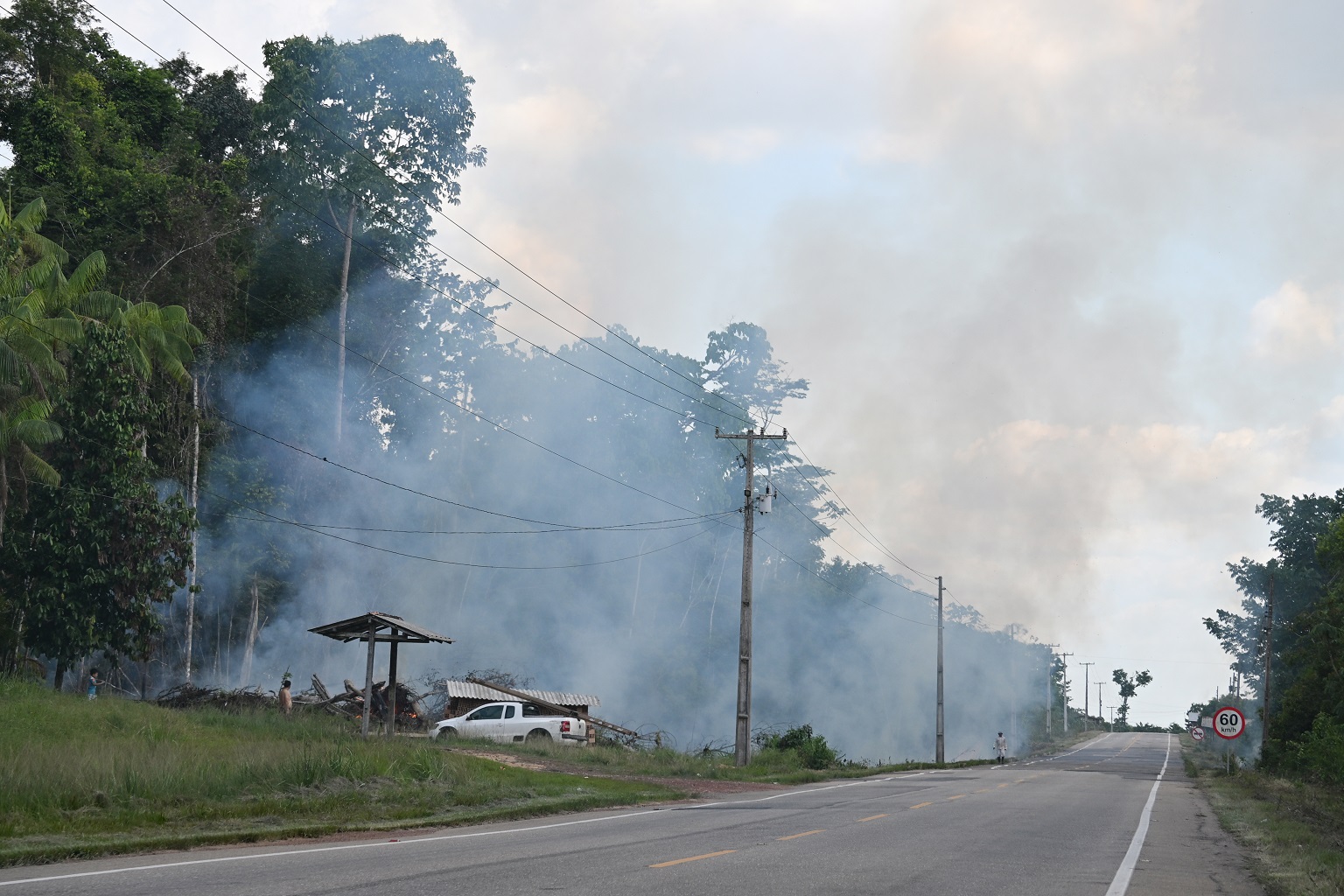
“When I first got here, every time I saw a burn, I wanted to issue a fine,” Mota said, referring to when she started the job in 2021. “If I saw even a bit of smoke, I wanted to go over there and tell them to stop. But I soon realized that isn’t realistic, given these are small producers struggling to make ends meet.”
Even large producers who were fined avoided paying the penalties in cash, instead negotiating compensation in the form of equipment, seedlings or services provided to the municipality. This problem extends far beyond Acará. A 2019 investigation by the investigative news outlet The Intercept Brasil found that only 3% of federal environmental fines were actually paid.
Another challenge runs even deeper. The frequent burns take place within a messy land ownership system that defines much of the Brazilian Amazon. With widespread confusion over who actually owns the land — and who set the fires — authorities often lack the basic information needed to assign responsibility.
“There’s a widespread lack of documentation for these properties,” Acará’s director of environment, Jonathan Troy, told Mongabay. “We have a land tenure issue. There are no land titles, no receipts, no proof of ownership.” In Brazil’s Rural Environmental Registry, meant to include all rural properties in the country, the vast territory of Acará has only 50 approved registrations.
Other barriers make enforcement even harder. Acará’s environmental department is severely underfunded and understaffed. The team has only two fire inspectors and only one field vehicle, making it difficult to investigate suspicious burns, identify culprits and issue fines across a large rural area.
Improvising on the fire line
After the dramatic Itapecuru wildfire, a wave of similar blazes broke out in Acará. Santos found himself crisscrossing the region in a small two-door hatchback, responding to reports as they came in. “I was working six or seven incidents a day,” he said. “I often camped out in the forest, and for months I only went home to grab a new bag of clothes before heading out again.”
Santos had no choice but to refine his low-cost firefighting strategy. He carefully organized 30 WhatsApp groups with residents from different communities, some groups with more than 150 people. Through the messaging app, members alerted him to fires that had gotten out of control and required his attention.
Arriving on the scene, he would find a house closest to the wildfire, ideally with internet access, to set up temporary headquarters. He would then use the same WhatsApp groups to recruit volunteers. And he would bring along enough food and water to keep them fighting fires for days, sometimes weeks.
“There were so many fires at once that sometimes I had to be in two places at the same time,” he recalled. “So I would video call volunteers and give them instructions on how to tackle the flames.”
He created another WhatsApp group, the “crisis committee,” with city hall leadership to coordinate additional support if the fires grew to dangerous proportions. He frequently requested the presence of firefighters from neighboring towns, but they, too, were overwhelmed as the fire season intensified. It was only in October that the state of Pará temporarily assigned a 30-person brigade to Acará, in response to the sheer number of incidents.
New data reveal that many rural towns throughout the Amazon struggled with similar challenges.

“The frontline response to these massive fires was ultimately left to the cities,” Jarlene Gomes, a researcher at IPAM and co-author of the report Fire Management in the Amazon, told Mongabay. “Meanwhile, the local level is also the one facing a major shortage of human and material resources.”
The report, released in November 2025, during COP30, found that up to that date, only about 16% of Amazon municipalities had operational units of the Military Fire Brigade — just 130 out of 808. The force, run by state governments, is responsible for protecting rural towns, while additional federal brigades respond to fires in Indigenous territories and national reserves.
The total number of firefighters also falls short of what is needed in a large-scale crisis. Pará state, the second-largest in Brazil and the most affected by the fires, had around 2,200 Military Fire Brigade firefighters. Meanwhile, the much smaller state of São Paulo in southeastern Brazil had nearly four times as many.
To fill in this gap, many rural cities have been recruiting volunteers. The report estimates that, in 2025, 52 municipalities had volunteer brigades at varying stages of development. “Many lack equipment, proper gear and any kind of training,” she said. “Some have managed to secure equipment, and others are equipped, trained and have some degree of institutionalization.”
Federal and state governments have been taking steps to improve wildfire response in the region.
In a statement, Brazil’s Ministry of the Environment and Climate Change said that since 2023, the federal government has made available $75 million from the Amazon Fund to strengthen fire departments in the Amazon. Pará has already received approximately half of an expected $8 million to support the purchase and modernization of vehicles, training programs and protective equipment.
The ministry has channeled an additional $3.4 million to improve prevention and response in the most impacted cities as part of its Union with Municipalities program.
Meanwhile, Pará state has launched the Pará Without Fires initiative to better organize actions statewide. The initiative includes establishing a permanent situation room to monitor fire outbreaks, zoning the most vulnerable areas and forming new forest brigades.
Gomes said these measures show progress, but more is needed as the climate becomes increasingly unpredictable. “We need to provide guidance, planning and structure at the municipal level,” she said. “If we have a strong El Niño again, the risk of disaster is even higher now that forests are more fragile due to past fires.”

After the fires, planning ahead
As the fire season wound down at the end of 2024, Santos was exhausted. He was also determined to be better prepared for the future, when he believes drought and fire will inevitably return.
In December 2024, his request to city hall to expand his team was approved, allowing him to hire eight new staff members — although most of them part-time. In August 2025, he also received a brand-new pickup truck to help travel across the vast municipality. More recently, he was given four new backpack sprayers to fight fires, bringing the total to six.
He proudly showcased all of these achievements on social media.
But the development that made him happiest was the inauguration of Acará’s first volunteer fire brigade this past December. “The 30 members are unpaid,” he said. “But if we face a severe wildfire season, we can hire them on a temporary basis. The important thing is that they have been fully trained.”
He revealed that a professional fire brigade is being planned for the future.
With climate events easing in 2025, Santos has also had time to focus on prevention — organizing community lectures on how to minimize the risks of using fire.
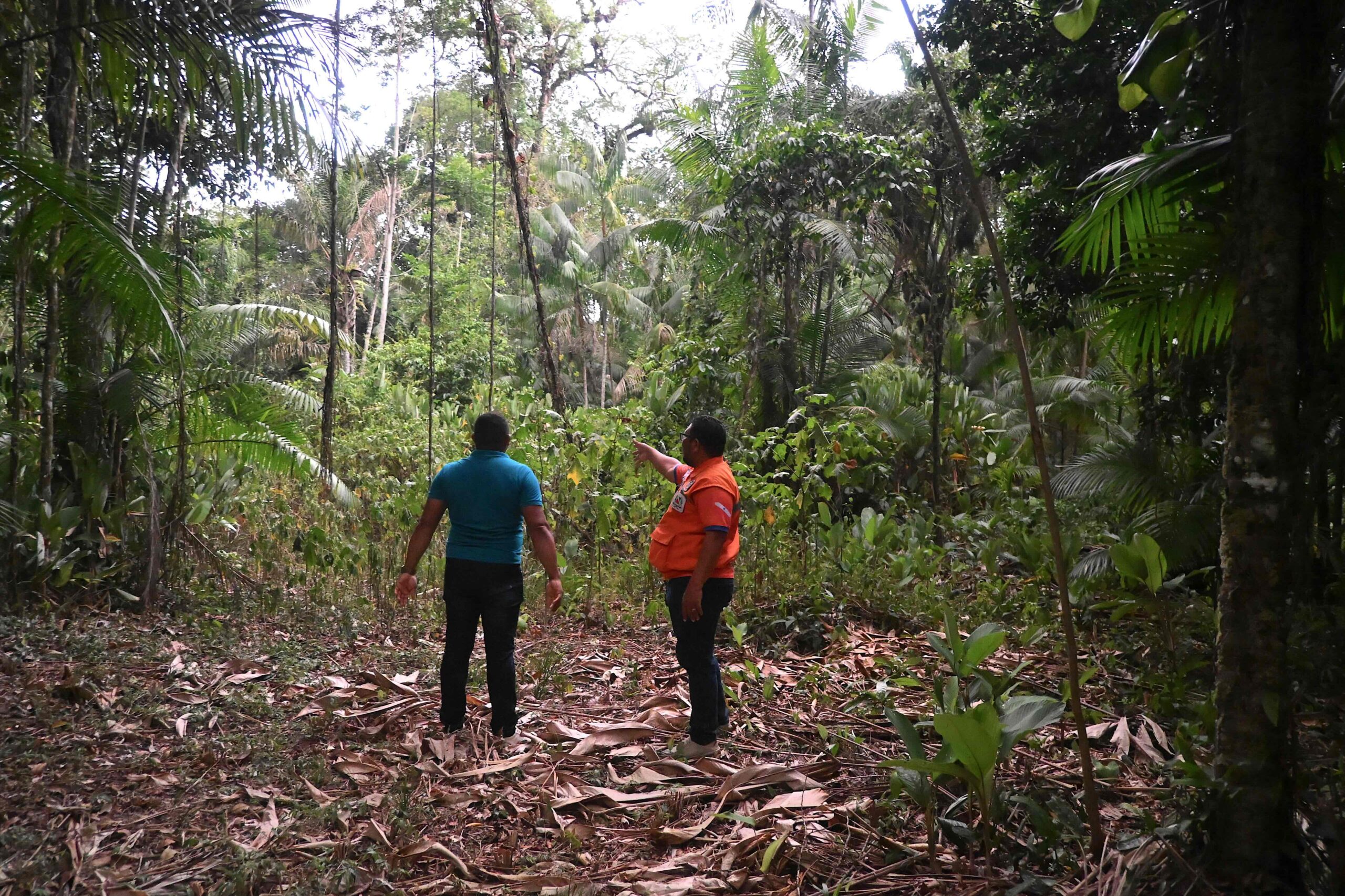
His team has been emphasizing the importance of creating firebreaks around farming plots and remaining vigilant throughout the burn. Ideally, they would use weed wackers to clear flammable vegetation and backpack sprayers to promptly contain fire spreads. Although he knows farmers do not have the gear.
Another idea is the use of tractors to clear farming plots, eliminating the need for fire altogether. But again, across the entire municipality of Acará, there are only 10 tractors, according to the city’s environmental department.
When Brazilian President Luiz Inácio Lula da Silva visited the local quilombo of Boa Vista during COP30, community members made a formal request for additional agricultural equipment. The community is home to 211 families descended from enslaved Africans and was hit hard by the 2024 fires, even losing a carefully managed nature reserve.
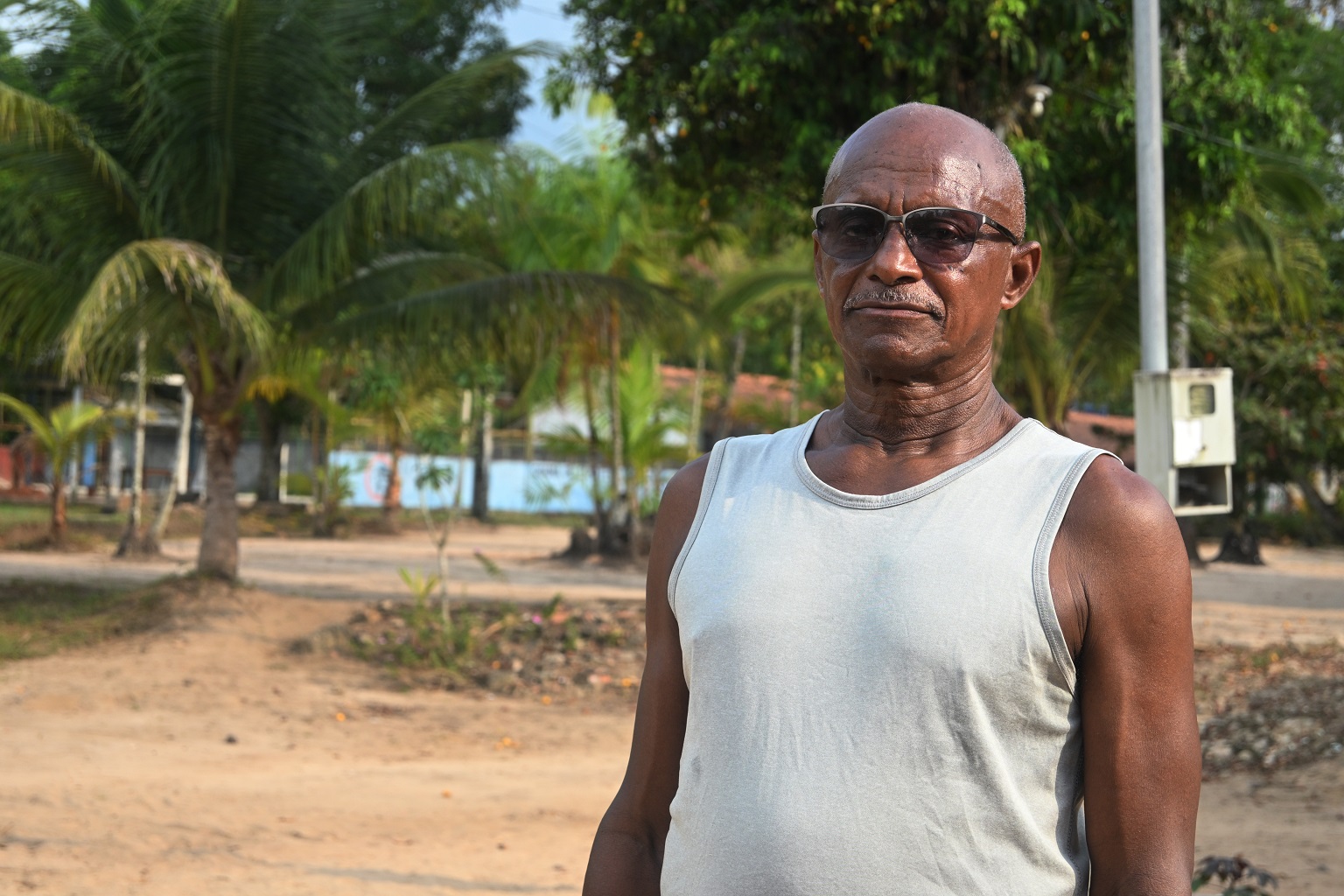
Community leader José Maria Alves Monteiro, 71, with 38 years of experience in agriculture, personally handed Lula a letter with this request.
“We asked the president to provide machinery for families preparing their plots,” Monteiro told Mongabay at the quilombo grounds. “Instead of clearing 10 areas with fire, they could use machines to clear a single area more efficiently, reducing deforestation and increasing production.”
At the same time, Monteiro would like to see reforestation efforts with a focus on agroforestry. “Families could plant açaí, cacao and andiroba trees in the same plot,” he said, referring to forest products in high demand. “Such a system could generate income and eventually eliminate their need for roças, which would benefit nature.”
Living with the aftermath
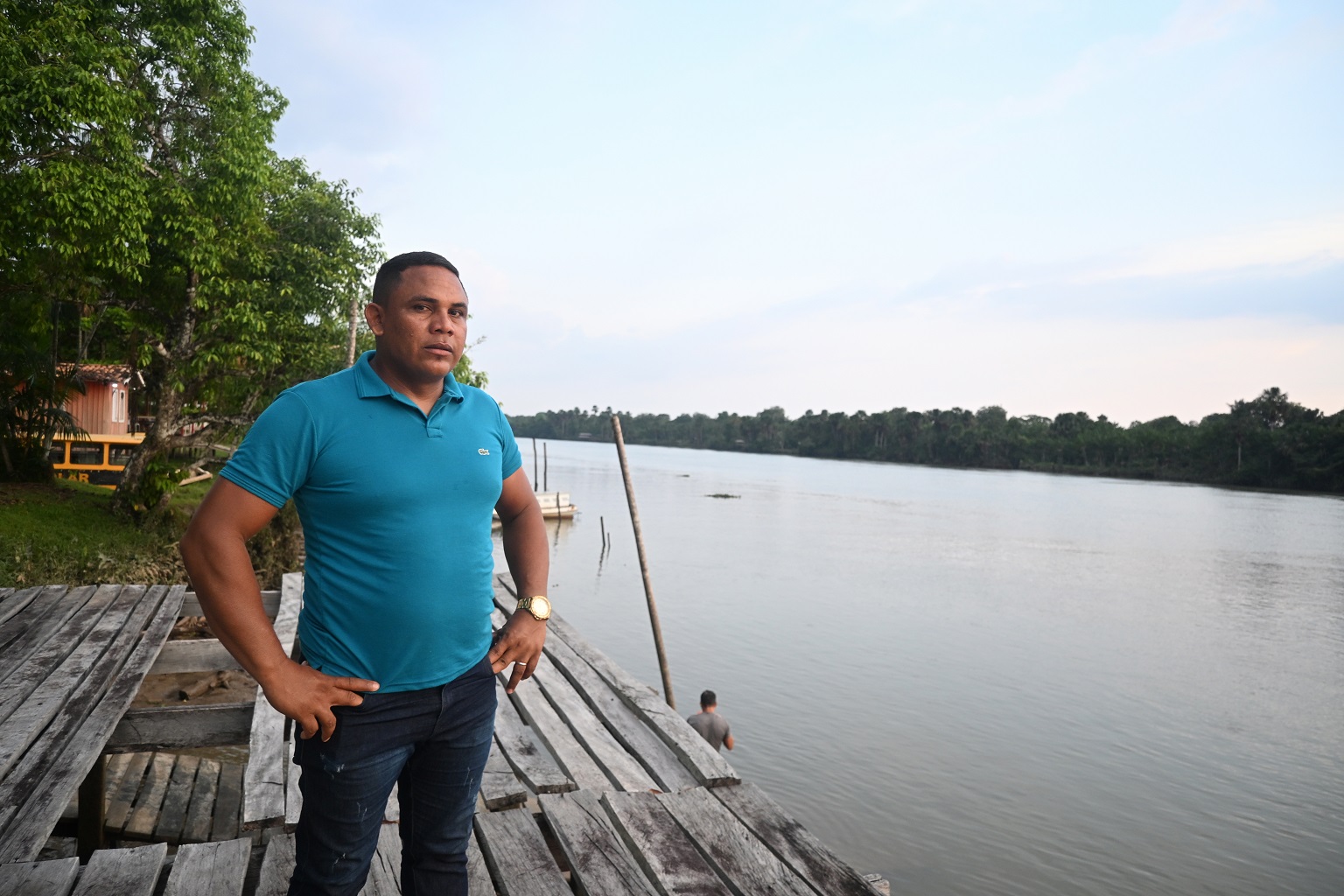
As COP30 unfolded in Belém this past November, Santos decided to revisit the areas that had burned in Acará. He was struck by the lasting damage.
One and a half years later, the forest around the Itapecuru stream was still scarred. Where large trees once stood, spaces remained, with bushes and small vegetation growing slowly. Scientists say it can take at least 20 years for native Amazonian trees to grow back, and even then, the forest rarely returns to its original form.
Deep scars remain in the local community as well.
Daniel Vinagre, owner of the house used as volunteer headquarters, makes his living by harvesting açaí from trees in the forest, an economic activity passed on for three generations. As a result of the fire, he lost 2 hectares (5 acres) of agroforestry land. In total, 12 families in the community were financially impacted.
For them, there are no other ways to make ends meet. “The work we do here is to harvest native açaí,” Vinagre told Mongabay. “There is no other option. Our land here is a floodplain. It’s not dry land, so we can’t really plant anything else.”
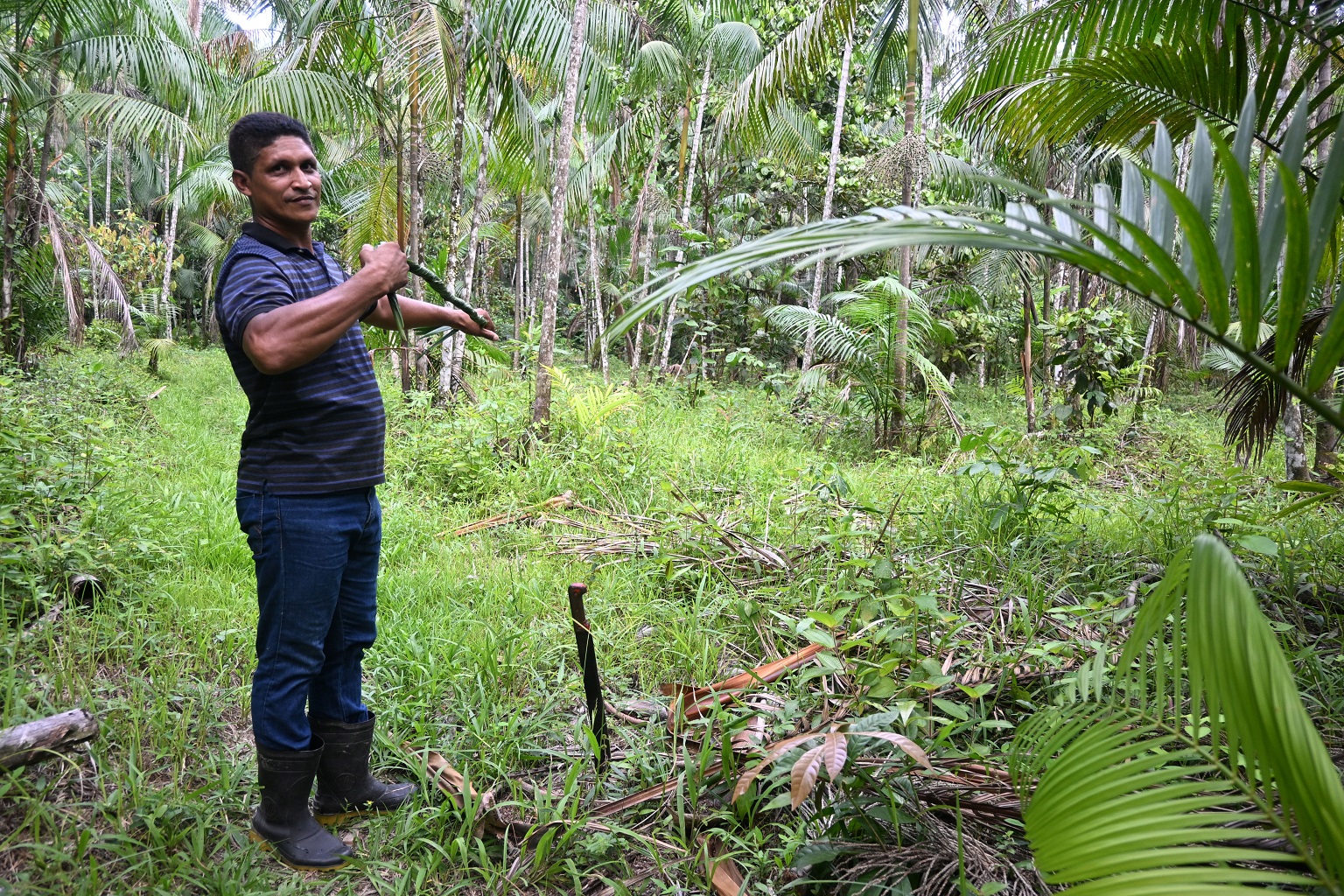
Because the fire stripped nutrients from the soil, it may take up to seven years to recover production. “The ground turned completely black. Only now are we thinking about spreading seedlings in the forest again, but that means it will take another five years for the açaí to grow,” he said, while hoping city hall will provide seedlings, which can be costly.
Vinagre’s health has also suffered since the wildfire. He was among the volunteers hauling water at the flames without masks or protective clothing. “I was sick for several weeks following that fire,” he said. He didn’t seek specialized medical care and does not know what long-term impacts this exposure could have.
These stories are heard across the municipality.
When Santos visited another community, Bom Futuro, he sat with residents on a large porch, eating pupunha, a small Amazonian fruit with a starchy flavor. They recalled a large wildfire they tackled together in October 2024, working day and night for two weeks. The flames burned on and off for 45 days until rain finally arrived, as drought conditions began to improve.
“Every now and then we sit here and think about how bad it was,” açaí producer Abimael Ponte told Mongabay. “At one point, I went into the forest and inhaled this colored smoke. I don’t know if it came from the tree roots, but I thought I was going to pass out. I felt a terrible dizziness,” he said.
He ended up visiting the hospital three times with breathing difficulties and lung issues. His wife was also impacted by the smoke that overtook the nearby community. “To this day, she’s very sensitive to any kind of smoke. Immediately, she starts coughing,” Ponte said.
Beyond health issues, they endured emotional distress.
“To make matters worse, on the day of the fire, we were on our way to my grandfather’s funeral,” Ponte said. “Once we realized the proportion of the fire, we left everything behind and just ran into the forest. To this day, we haven’t properly mourned his passing.”
Ponte said he will never fully relax again. Just recently, he put out a small fire near the same forestland that had burned. “People think they can burn a little square of land to plant crops, but the forest is still dry, and the wind can carry these sparks again,” he said. “We’re afraid it will happen again. We’re always scared.”
With each visit to check on community members, Santos was warmly welcomed. He attributes his popularity to staying in close contact with residents in the aftermath of the wildfires. He helped to organize a donation drive for those struggling the most, including food products and açaí seedlings.
His work during and after the 2024 wildfire season was recently recognized with the Knight Medal for Civil Distinction from the Pará State Military Fire Department, an official honor for contributions to firefighting.
“After the fires, many people tried to convince me to run for city council,” he said, a common path for popular figures in small Brazilian towns. But he declined, even as he pursues a degree in political science, his third bachelor’s degree. “I could probably win an election, but this is my mission, right here,” he said.
Banner image: As COP30 unfolded in Belém this past November, civil defense coordinator Edson Abreu dos Santos decided to revisit the areas that had burned in Acará. Image by Carla Ruas.

About the Author